| Battles of the Civil War | |||||||
This huge section of LearnaboutAmerica.com includes articles, activities, interactives, and printables on all of the major battles in the Civil War. The word "MAJOR" after a link indicates it as an ESSENTIAL battle of the war. "TC" means the page is a topic center, which contains numerous activities and lesson plans related to the subject. "TOP10" means it was one of the top ten deadliest battles of the Civil War. "ICONIC" means it is one of the best-known battles of the Civil War |
|||||||
|
|||||||
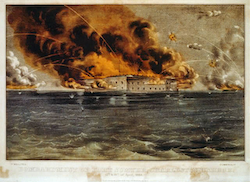 |
Battle of Fort Sumter - ICONIC | TC
Slavery was a central cause of the Civil War, as it created deep economic, political, and moral divisions between the Northern and Southern states. Southern states relied on enslaved labor for their agricultural economy and sought to protect and expand the institution. |
||||||
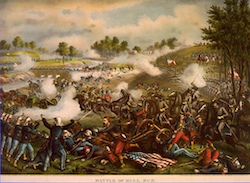 |
First Battle of Bull Run (Manassas) - ICONIC | MAJOR | TC The First Battle of Bull Run, fought on July 21, 1861, in Manassas, Virginia, was the first major battle of the Civil War and ended in a surprising Confederate victory. The Union’s early hopes for a quick war were shattered as inexperienced troops and panicked spectators fled in a chaotic retreat. |
||||||
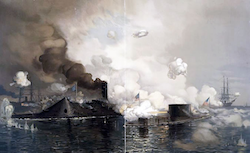 |
Battle of the Ironclads ICONIC | TC The Battle of the Ironclads, fought on March 8–9, 1862, at Hampton Roads, was the first clash between iron-covered warships—the Union’s Monitor and the Confederacy’s Virginia. Though the battle ended in a draw, it marked a turning point in naval warfare, signaling the end of wooden warships and the rise of ironclad fleets worldwide. |
||||||
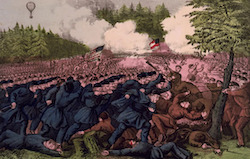 |
McClellan's Peninsula Campaign The Peninsula Campaign was Union General George B. McClellan’s failed attempt to capture Richmond by advancing up the Virginia Peninsula in the spring of 1862. Despite having superior numbers, McClellan’s cautious tactics and overestimation of Confederate strength led to delays and a retreat after heavy fighting in the Seven Days Battles. |
||||||
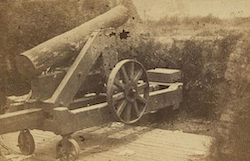 |
The Quaker Gun incident occurred during the Peninsula Campaign when Confederate forces at Yorktown used painted logs, or "Quaker Guns," to trick Union General McClellan into believing they had strong artillery defenses. Misled by the fake cannons, McClellan delayed his attack, giving the Confederates time to retreat safely. |
||||||
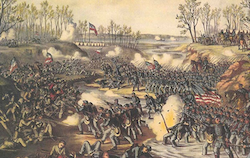 |
Battle of Shiloh Church (Pittsburg Landing) MAJOR | TC | TOP10 The Battle of Shiloh Church, fought on April 6–7, 1862, was a brutal clash in Tennessee where Confederate forces launched a surprise attack against Union troops under General Ulysses S. Grant. Although the Confederates gained early ground, Union reinforcements arrived overnight, leading to a powerful counterattack that forced a Confederate retreat and resulted in over 24,000 casualties—the bloodiest battle in American history up to that point. |
||||||
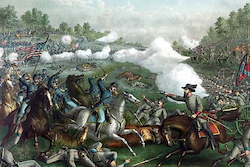 |
The Battle of Winchester, fought on May 25, 1862, was a key Confederate victory during Stonewall Jackson's Valley Campaign, where Jackson’s forces overwhelmed Union troops led by General Nathaniel Banks. Despite initial resistance, the Union army was forced into a retreat after heavy Confederate assaults, resulting in the capture of many Union soldiers and the Confederates gaining control of the Shenandoah Valley. |
||||||
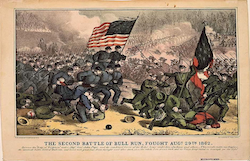 |
Second Battle of Bull Run (Manassas) MAJOR | TC | TOP10 The Second Battle of Bull Run, fought from August 28–30, 1862, was a major Confederate victory where General Robert E. Lee’s forces outmaneuvered and crushed Union General John Pope’s Army of Virginia. Miscommunication, poor leadership, and a massive Confederate counterattack led to over 10,000 Union casualties and paved the way for Lee’s invasion of the North. |
||||||
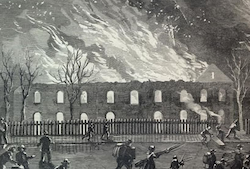 |
The Battle of Harper’s Ferry, fought in September 1862, resulted in a swift Confederate victory as General Stonewall Jackson surrounded the town with artillery and launched a coordinated assault. Poor Union defenses and leadership led to the largest surrender of Union troops during the Civil War, with nearly 12,000 soldiers captured. |
||||||
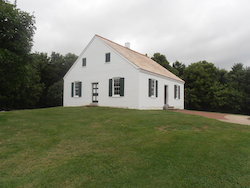 |
Battle of Antietam MAJOR | TC | TOP10 The Battle of Antietam was the bloodiest one-day battle in American history. It represented Lee's first failed foray into the Northern states. Although it is considered a tactical draw, the Confederacy failed in its efforts to bring the war to the North and to achieve foreign recognition. It also resulted in Lincoln issuing the Emancipation Proclamation. |
||||||
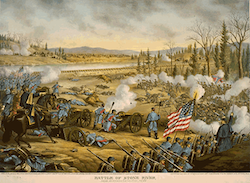 |
Battle of Stones River TOP10 The Battle of Stones River, fought from December 31, 1862, to January 2, 1863, was one of the bloodiest battles of the Civil War, with nearly one-third of all soldiers killed, wounded, or captured. Though the battle ended in a tactical draw, it gave the Union control of Nashville and middle Tennessee, a key strategic victory. |
||||||
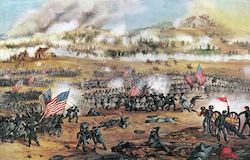 |
The Battle of Fredericksburg MAJOR | TOP10 Fought in December 1862, the Battle of Fredericksburg was a devastating Union defeat marked by repeated failed assaults on heavily fortified Confederate positions at Marye’s Heights. Union General Ambrose Burnside’s poor planning led to over 12,000 Union casualties, while Confederate forces suffered far fewer losses. |
||||||
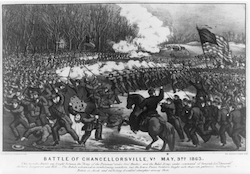 |
The Battle of Chancellorsville MAJOR | TOP10 | TC The Battle of Chancellorsville, fought in May 1863, is considered General Robert E. Lee’s greatest victory, where he defeated a much larger Union force through bold tactics and a surprise flank attack by Stonewall Jackson. Despite the win, the Confederacy suffered a major loss with the death of Jackson, and the victory inspired Lee’s decision to invade the North again. |
||||||
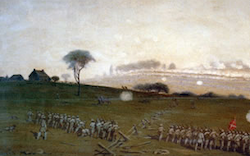 |
The Battle of Gettysburg MAJOR | ICONIC | TOP10 | TC The Battle of Gettysburg, fought from July 1–3, 1863, was the largest and deadliest battle of the American Civil War, resulting in over 50,000 casualties. It marked a turning point in the war, ending General Robert E. Lee’s invasion of the North and giving the Union a critical strategic victory.
|
||||||
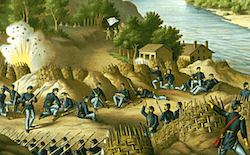 |
Siege of Vicksburg MAJOR | TC The Siege of Vicksburg was a major Union victory during the Civil War in which General Ulysses S. Grant surrounded the fortified city for over 40 days, cutting off supplies and bombarding it until Confederate forces surrendered on July 4, 1863. This victory gave the Union full control of the Mississippi River and split the Confederacy in two. |
||||||
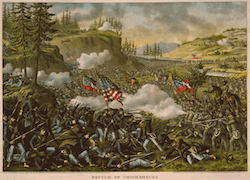 |
Battle of Chickamauga MAJOR | TOP10 The Battle of Chickamauga, fought in September 1863, was the second deadliest battle of the Civil War and marked a major Confederate victory in the Western Theater. Although Union forces were forced to retreat, they managed to hold Chattanooga, which would become key in later Union victories. |
||||||
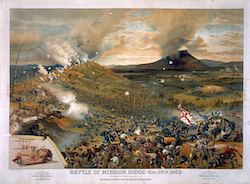 |
Battle of Chattanooga MAJOR The Battle of Chattanooga took place in November 1863 and resulted in a major Union victory that broke the Confederate siege of the city. This victory gave the Union control of a key railroad hub and opened the gateway for General Sherman’s advance into the Deep South. |
||||||
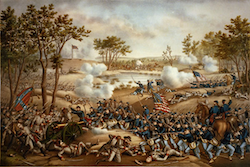 |
Grant's Overland Campaign (includes Wilderness, Spotsylvania, and Cold Harbor) - MAJOR | TOP10 | ICONIC | TC Grant’s Overland Campaign was a series of brutal battles in Virginia in 1864, aimed at wearing down Robert E. Lee’s Confederate army and capturing Richmond. Although Union forces suffered heavy losses, Grant’s relentless strategy pushed Lee’s army closer to defeat and marked a turning point in the war. |
||||||
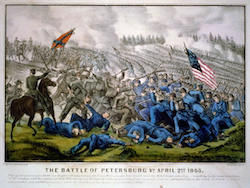 |
Siege of Petersburg - MAJOR The Siege of Petersburg was a prolonged military campaign from June 1864 to April 1865, where Union forces under General Ulysses S. Grant aimed to cut off Confederate supply lines to Richmond. After nine months of trench warfare and heavy fighting, the Union finally broke through, leading to the fall of both Petersburg and the Confederate capital.
|
||||||
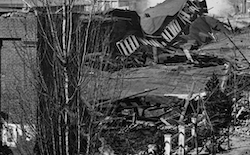 |
The fall of Atlanta took place on September 2, 1864, after Union forces under General William T. Sherman cut off the city’s last supply lines and forced Confederate troops to evacuate. As they left, the Confederates set fire to military supplies, and much of the city was destroyed, marking a major turning point in the Civil War. |
||||||
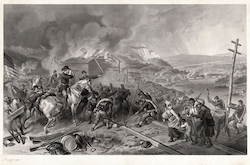 |
Sherman's March to the Sea - ICONIC | TC Sherman's March to the Sea was a devastating Union campaign from Atlanta to Savannah, Georgia, in late 1864, led by General William T. Sherman. His troops destroyed railroads, crops, and infrastructure along the way to break the South's will to fight and cripple its ability to wage war. |
||||||
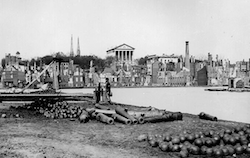 |
Fall of Richmond - TC The fall of Richmond occurred on April 3, 1865, after Confederate forces evacuated the city and set fire to supplies, causing massive destruction. Union troops entered the burning capital the next day, marking the collapse of the Confederate government and a key step toward the end of the Civil War. |
||||||
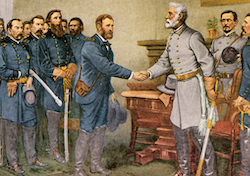 |
Surrender at Appomattox MAJOR | ICONIC | TC On April 9, 1865, Confederate General Robert E. Lee surrendered to Union General Ulysses S. Grant at Appomattox Court House, effectively ending the Civil War. Grant offered generous terms, allowing Confederate soldiers to return home with their horses and promised no punishment if they obeyed the law. |
||||||