Battle of Gettysburg Day 2 - July 2, 1863 |
||||
Gettysburg Day 2 |
||||
The FishhookDuring the night Of July 1st, most of the remaining Union and Confederate forces arrived in Gettysburg. The Union army was able to establish a strong line in the shape of a fishhook running over two miles from Cemetery Hill, along Cemetery Ridge and terminating at Culp's Hill. Confederate lines ran the length of Seminary Ridge, through the town of Gettysburg and terminated at a location opposite of Culp's Hill. In all, Confederate lines stretched for more than five miles. The stage was set for a massive battle. Missing IntelligenceWithout intelligence from J.E.B. Stuart's cavalry, however, Lee could not be certain of the exact positioning of Union forces, thus, his battle strategy for the second day of Gettysburg was somewhat flawed. Lee planned to launch a series of successive attacks with Longstreet's Corps on the Union left flank. The series of attacks and the diagonal formation of the attackers, would, theoretically, prevent the shifting of Union troops to reinforce the left flank. Meanwhile, other divisions would attack Union positions at Culp's Hill and Cemetery Hill. Lee did not know, however, that Union Major General Daniel Sickels and his troops were positioned in between Confederate forces and the Union left flank. Attacks on Devil's Den and Little Round Top
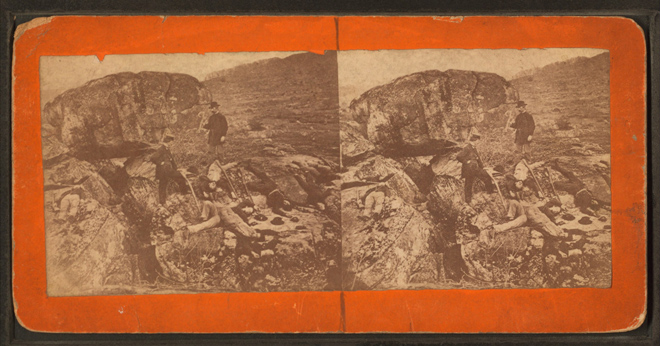
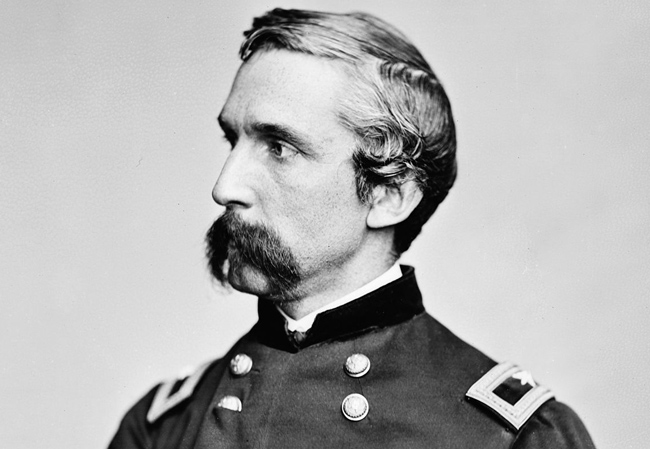
On the sweltering afternoon of July 2nd, General Longstreet's soldiers engaged Sickels' III Union Corps, driving them back and forcing Union Commander Meade to send 20,000 reinforcements. Confederate Major General John Bell Hood launched attacks on Union divisions positioned at a location known as Devil's Den and a hill called Little Round Top. Sickles' III Corps was driven into a nearby wheatfield by Confederate forces under Lafayette McClaws before being thoroughly routed in a peach orchard. Pennsylvania Reserve soldiers eventually repulsed McClaws' assaults on Little Round Top, an important hill on the extreme Union left flank. Meanwhile, a division of McClaws' Army under the command of Richard Anderson led an assault on Cemetery Ridge that would have been successful if not for a desperate bayonet charge by the 1st Minnesota Regiment. The assaults on Little Round Top, however, were far from over. Positioned at the extreme left flank of the Union line, it represented a major prize for the Confederacy if it could gain control of the hill. If Little Round Top could be occupied, Rebel forces could outflank the Union and attack the line from two directions. Chamberlain's StandThe Union position at Little Round Top was precarious, but their small forces fought valiantly and repulsed numerous assaults by Confederate divisions. Just before Rebel soldiers under the command of John Bell Hood arrived at Little Round Top, Union reinforcements reached the scene and repulsed additional assaults. In the battle, the 20th Maine Regiment under the Command of Colonel Joshua Chamberlain, ran out of ammunition after fighting for four hours. Facing yet another Rebel charge from up the hill, the soldiers responded with a vicious bayonet charge, scattering the exhausted Confederates, and ending the assault on Little Round Top, preventing the Confederates from flanking the Union Army. Learn more about Chamberlain's stand at Little Round Top
Attacks on Culp's HillAttacks on the Union right flank began around 7:00 P.M. Because the majority of Union defenders on Culp's Hill had been moved to reinforce the left flank, Confederate forces under Edward Johnson attempted to exploit the vulnerability there. Union forces remaining on the hill, however, had constructed strong defensive works and were able to repulse most of the attacks. The Rebels did succeed in gaining control of a portion of the lower slope of Culp's Hill By the end of the second day of fighting, it was still unclear who would ultimately prevail. Discussion Questions
Proceed to Gettysburg: Day 3The Fishhook LineOn the night of July 1st, Union and Confederate troops arrived in Gettysburg. The Union army formed a strong line shaped like a fishhook, stretching from Cemetery Hill to Culp’s Hill. The Confederate line stretched over five miles from Seminary Ridge through town to Culp’s Hill. A huge battle was about to begin. Lack of Information Hurts LeeGeneral Lee didn’t know the exact location of the Union army because his cavalry, led by J.E.B. Stuart, had not reported back. Lee planned to attack the Union left with Longstreet’s Corps and also hit Cemetery Hill and Culp’s Hill. But Lee didn’t realize that Union General Sickles had moved his men between these points, changing the battlefield. Fighting at Devil’s Den and Little Round TopOn July 2nd, Longstreet’s troops attacked Sickles’ Corps, pushing them back. Union Commander Meade sent 20,000 reinforcements. Confederate forces attacked Devil’s Den and Little Round Top. The Union was driven back through a wheatfield and a peach orchard, but held Little Round Top with help from the 1st Minnesota Regiment. If the Confederates took Little Round Top, they could have attacked the Union from the side. Chamberlain’s DefenseLittle Round Top was key to the Union defense. The 20th Maine Regiment, led by Colonel Joshua Chamberlain, ran out of ammo after fighting for hours. When more Confederate soldiers attacked, Chamberlain ordered a bayonet charge, driving them back and saving the hill. Attack on Culp’s HillLater that evening, Confederate forces attacked Culp’s Hill on the Union right. Many Union troops had been moved to help the left side, but those remaining had built strong defenses. The Confederates only took a small part of the lower hill. The second day ended without a clear winner. |
||||
| Gettysburg Activities | ||||
|