From Fort Moultrie to Fort Sumter
The Battle of Fort Sumter marked the first exchange of fire in the Civil War. After seven southern states ratified their declarations of secession, the state of South Carolina demanded that Federal (United States) troops stationed at Fort Moultrie (in Charleston Harbor) abandon the fort. On December 26, 1860, however, Union Major General Richard Anderson moved his troops from Fort Moultrie to Fort Sumter, because he thought Fort Sumter was more easily defended. South Carolina subsequently seized all other Federal forts in South Carolina except for Fort Sumter. About two weeks later, U.S. president at the time James Buchanan authorized the delivery of reinforcements to Fort Sumter. The ship carrying the reinforcements was fired upon by batteries from the South Carolina shore and the reinforcements never made it.
The South is Serious!
Over the course of the next few months, Confederate forces strengthened batteries around Fort Sumter. Furthermore, the new president of the Confederacy, Jefferson Davis, appointed his first military officer, P.G. T. Beauregard, to command forces in Charleston. Ironically, Anderson and Beauregard were close friends and Beauregard even served as Anderson’s assistant after graduation from West Point.
The Bombardment and Siege
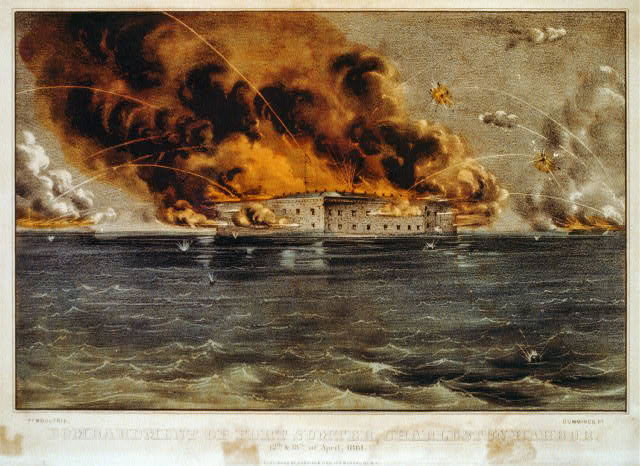
Inside the fort, Anderson and his troops were running short on food and supplies as a siege began to form. New president Abraham Lincoln again tried to resupply the fort and notified South Carolina Governor Francis Pickins that he was sending in ships. In response, Confederate forces demanded the immediate surrender of the fort. After General Anderson refused the demand, they began bombarding Fort Sumter at 4:30 in the morning on April 12, 1861.
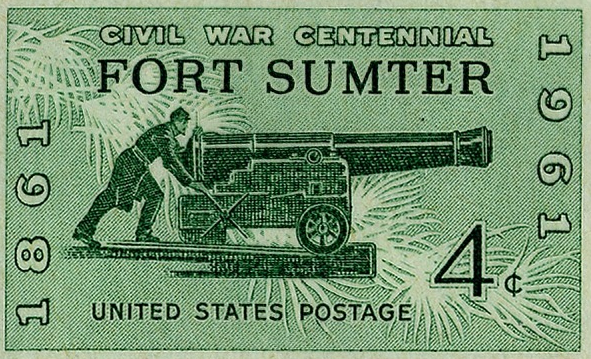
Fort Sumter Postage Stamp (19610
Surrender
Confederate forces firing on Fort Sumter quickly took their toll. Badly outgunned and outmanned, Anderson’s forces inside the fort initially returned fire, but were soon overwhelmed. After 34 hours, Major General Anderson agreed to evacuate the fort. No American or Confederate soldiers were killed during the battle, though two soldiers would die as a result of a gun explosion during the surrender ceremonies on April 14.
Mobilizing for War
Both the North and the South became galvanized in their war efforts after Fort Sumter. President Lincoln’s request for the mobilization of 75,000 additional troops prompted the secession of four other states.
NPS Video on Fort Sumter |
Discussion Questions
- Why did Major General Anderson move his troops from Fort Moultrie to Fort Sumter?
- What role did P.G.T. Beauregard play in the events at Fort Sumter, and why was his relationship with Anderson significant?
- How did President Lincoln and the Confederate forces respond to the resupply attempt at Fort Sumter?
- What were the consequences of the Battle of Fort Sumter for both the North and the South?
Moving from Fort Moultrie to Fort Sumter
After seven southern states seceded from the Union, South Carolina told U.S. troops to leave Fort Moultrie in Charleston Harbor. Instead, on December 26, 1860, Union Major General Robert Anderson moved his troops to nearby Fort Sumter, which was easier to defend. South Carolina then took over all other U.S. forts in the state except Fort Sumter. About two weeks later, President James Buchanan sent reinforcements, but the ship was fired on and turned back.
The South Gets Ready
Over the next few months, Confederate forces built up their defenses around Fort Sumter. Confederate President Jefferson Davis chose P.G.T. Beauregard to lead the troops in Charleston. Beauregard had once been a friend and assistant to Anderson, making the conflict between them personal.
The Siege Begins
Anderson and his men were running out of supplies inside the fort. President Abraham Lincoln tried again to send help and told South Carolina’s governor in advance. In response, Confederate forces demanded Anderson surrender. When he refused, they began firing on the fort at 4:30 AM on April 12, 1861.
The Surrender
Confederate fire quickly damaged the fort. Anderson’s troops fought back at first but were overwhelmed. After 34 hours, Anderson agreed to leave the fort. No one died during the battle, but two soldiers were killed during the surrender ceremony on April 14 due to a gun accident.
War Begins
The attack on Fort Sumter pushed both the North and South into full war mode. President Lincoln called for 75,000 more troops, and four more states decided to secede from the Union.
|