Effects of the Civil War |
|
| The effects of the American Civil War can be felt to this day. Click on a topic below to learn more and access printable and online activities. | |
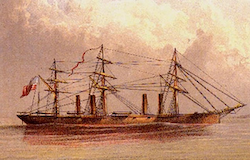 |
The Trent Affair - Tension Between the United States and England The Trent Affair was a diplomatic crisis in 1861 during the U.S. Civil War, when the U.S. Navy captured two Confederate diplomats from the British mail ship Trent. The incident angered Great Britain and nearly led to war, but tensions eased after the U.S. released the diplomats. |
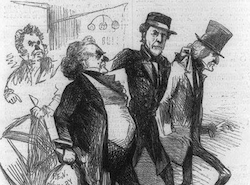 |
Foreign Recognition or Not? The Belligerent Status of the Confederacy The Confederacy needed foreign recognition during the Civil War to gain access to weapons, supplies, and possible military support from powerful nations like Great Britain and France. Southern leaders believed their cotton trade was valuable enough to convince these countries to support their cause. |
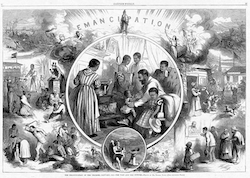 |
The Emancipation Proclamation was an order issued by President Abraham Lincoln on January 1, 1863, declaring all slaves in Confederate-held territory to be free. While it did not immediately free all enslaved people, it changed the purpose of the Civil War by making the fight to end slavery a central goal.
|
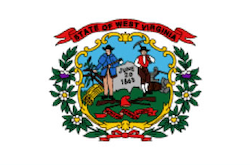 |
During the Civil War, Virginia split when the western region opposed secession from the United States and chose to remain loyal to the Union. This led to the creation of West Virginia, which became a separate state on June 20, 1863. |
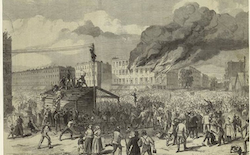 |
The New York Draft Riots of July 1863 were violent protests against the Civil War draft, sparked by anger over a law allowing wealthy men to pay $300 to avoid military service. The riots, fueled by class and racial tensions, resulted in widespread destruction and the deaths of dozens to possibly hundreds, until federal troops restored order. |
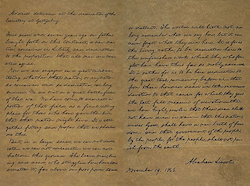 |
The Gettysburg Address was a brief but powerful speech delivered by President Abraham Lincoln on November 19, 1863, at the dedication of a cemetery for soldiers who died in the Battle of Gettysburg. In just 272 words, Lincoln honored the fallen and reaffirmed the principles of liberty, equality, and democracy at the heart of the American nation. |
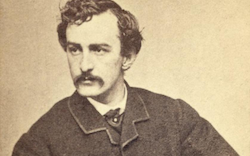 |
The Assassination of Abraham Lincoln President Abraham Lincoln was assassinated on April 14, 1865, by actor and Confederate sympathizer John Wilkes Booth while attending a play at Ford’s Theatre in Washington, D.C. Lincoln died the next morning, making him the first U.S. president to be assassinated, just days after the Civil War had effectively ended. |
The End of Slavery - 13th Amendment The end of slavery in the United States came after the Civil War with the ratification of the 13th Amendment in December 1865, which officially abolished slavery in all states. This marked a major turning point in American history, granting freedom to millions of formerly enslaved people. |
|