Slavery in the Southern States

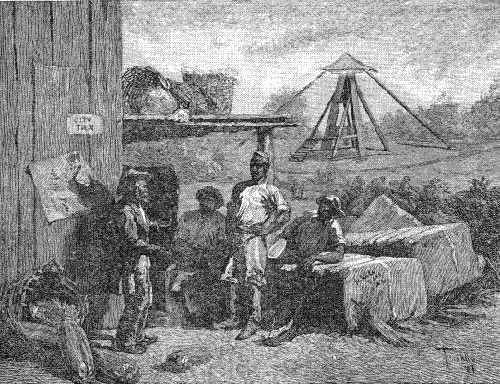
Southern Slaves

Southern Perspective

The issue of slavery became more and more contentious between northern states and southern states in the middle part of the 19th century, especially as the United States expanded westward and began to take in new territories and states. Slavery was important to the southern economy because of the large labor force required to pick and process cotton - the southern cash crop. The southern states scored a victory with the passing of the Kansas-Nebraska Act of 1854. Introduced by Stephen A. Douglas, the bill called for the residents of the particular territory to choose for itself on the issue of slavery(otherwise known as popular sovereignty). Northern politicians such as Abraham Lincoln and abolitionists (those opposed to slavery) fought vigorously against the bill. With the election of President Lincoln in 1860, southern officials began to fear that Lincoln would repeal the bill and that the northern majority would threaten their way of life – and their economic interests. Southern states began to fear that Lincoln would emancipate slaves. The 1859 raid on the federal arsenal by John Brown, a radical abolitionist, perpetuated fears and led many to believe in a northern conspiracy. Shortly after Lincoln's election, South Carolina officially seceded from the Union. Ten states would follow soon after and form the Confederate States of America.

Learn more about: The First Enslaved People in America at Jamestown | History of Cotton | History of Tobacco

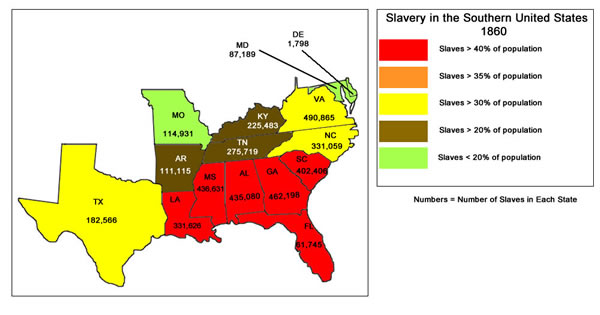
Slavery in the Southern States in 1860
Slavery in the Southern States - 1860

Northern Perspective

Although the North was divided on their views of slavery, political officials in power such as Abraham Lincoln fought against the Kansas- Nebraska Act. Although many viewed slavery as immoral, which was one reason for its proposed abolishment, officials in the north were also worried that the extension of slavery into western states would give the southern states disproportional influence in such areas. When Abraham Lincoln was elected president, eleven states promptly seceded from the Union. Lincoln deemed this unacceptable and declared war for the purposes of preserving the Union.


Discussion Questions

  • Why was slavery so important to the Southern economy, and how did westward expansion increase tensions between the North and South?
  • What was the purpose of the Kansas-Nebraska Act, and why did it cause such strong reactions in both the North and the South?
  • How did the election of Abraham Lincoln in 1860 contribute to the Southern states’ decision to secede from the Union?
  • What role did John Brown’s raid play in increasing fear and mistrust between the North and South?

Southern Perspective

In the mid-1800s, disagreements over slavery grew stronger between the northern and southern states, especially as new territories were added to the country. The South depended on slavery for its economy, especially for growing and processing cotton. In 1854, the Kansas-Nebraska Act was passed, letting each new territory vote on whether to allow slavery. This idea, called popular sovereignty, was supported by the South and introduced by Stephen A. Douglas. Many Northerners, including Abraham Lincoln and abolitionists (people who wanted to end slavery), strongly opposed it.

When Lincoln was elected president in 1860, southern leaders feared he would end slavery and hurt their economy. The 1859 raid on a federal arsenal by John Brown, a radical abolitionist, increased fears of a Northern plan to destroy slavery. Soon after Lincoln’s election, South Carolina left the Union, and ten more states followed, forming the Confederate States of America.

Northern Perspective

The North had mixed feelings about slavery, but many leaders, including Abraham Lincoln, opposed its spread into new states. Some people saw slavery as morally wrong, while others were worried that if slavery spread west, the South would gain too much political power. After Lincoln became president, eleven Southern states left the Union. Lincoln believed this was unacceptable and began a war to bring the states back and preserve the country.

Slavery Activities