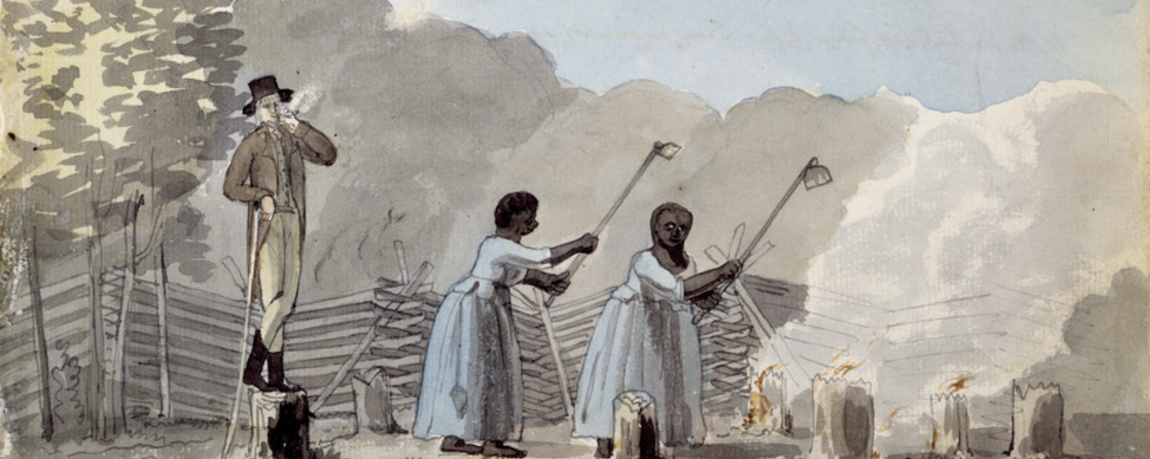
The Birth of Slavery in America |
An Overseer Doing his Duty (1798) Benjamin Henry Latrobe |
IntroductionThe establishment of Jamestown in 1607 marked the beginning of English colonization in North America, but it also initiated a dark chapter in American history—the introduction of African slavery to the continent. The arrival of the first enslaved Africans in Jamestown in 1619 signaled the start of a system of bondage that would profoundly shape the course of American society and culture for centuries to come. The Origin of EnslavementThe story of the first enslaved Africans in Jamestown begins with the arrival of a Dutch ship, the White Lion, in late August 1619. The ship docked at Point Comfort, present-day Hampton, Virginia, and traded "20 and odd" Africans for provisions. These individuals were not the first Africans to arrive in the English colonies, but their arrival in Jamestown is significant as it marks one of the earliest documented instances of African slavery in British North America. The Status of the EnslavedThe legal status of these early African arrivals in Jamestown remains a matter of debate among historians. Some argue that they were treated as indentured servants, bound by contracts to work for a set period before gaining their freedom. Others contend that they were enslaved from the outset, deprived of basic rights and treated as property. Regardless of their legal status, their arrival marked the beginning of an institution of slavery that would become entrenched in the American colonies. Click here to learn more about Enslaved People vs Indentured Servants Why Were Enslaved People Brought to Jamestown?Labor Shortages: In the early years of the Jamestown colony, the settlers struggled to establish profitable industries, particularly in agriculture. Tobacco cultivation emerged as a lucrative venture, but it required large amounts of labor. The indigenous Powhatan people initially provided some labor, but conflicts and diseases decimated their populations. As a result, there was a growing demand for labor to cultivate and harvest tobacco. Economic Considerations:Tobacco became the primary cash crop of Virginia, providing much-needed revenue for the struggling colony. However, its cultivation was labor-intensive and required a large workforce. The arrival of enslaved Africans provided a cheap and readily available source of labor to meet the demands of the burgeoning tobacco industry. Established Slave Trade:By the early 17th century, European powers, particularly Portugal, Spain, and the Netherlands, had established extensive networks of trade in enslaved Africans. The transatlantic slave trade was already well-established, with millions of Africans forcibly transported to the Americas to work on plantations and in other industries. The English colonists in Jamestown were aware of this trade and saw the acquisition of enslaved Africans as a means to address their labor shortages. Life in BondageLife for enslaved Africans in Jamestown was characterized by toil, exploitation, and brutality. Forced to work on tobacco plantations and in other industries, they endured harsh conditions, backbreaking labor, and systematic dehumanization. They were subjected to violence, abuse, and separation from their families, with little hope of ever gaining their freedom or achieving equality in colonial society. The Legacy of SlaveryThe introduction of African slavery to Jamestown had profound and far-reaching consequences for American history and culture. It laid the foundation for the development of a society built on the exploitation and subjugation of African peoples. Discussion Questions
Glossary
IntroductionIn 1607, the English started their first permanent colony in North America called Jamestown. In 1619, a ship brought enslaved Africans to Jamestown, starting a system of slavery that lasted for centuries. The First Enslaved AfricansIn August 1619, a Dutch ship called the White Lion arrived in Virginia. It traded about 20 Africans for food. This marked one of the first times enslaved Africans were brought to the English colonies. Were They Slaves or Servants?Some historians believe these Africans were indentured servants, meaning they would be freed after a few years of work. Others believe they were treated as slaves from the start. Either way, their arrival was the beginning of slavery in America. Why Were Enslaved People Brought to Jamestown?
Life in BondageEnslaved Africans in Jamestown worked very hard, were often treated cruelly, and had few rights. Many were separated from their families and had no chance of freedom. The Legacy of SlaveryThe arrival of slavery in Jamestown led to many years of unfair treatment of African people in America. It shaped American history in many serious ways. |