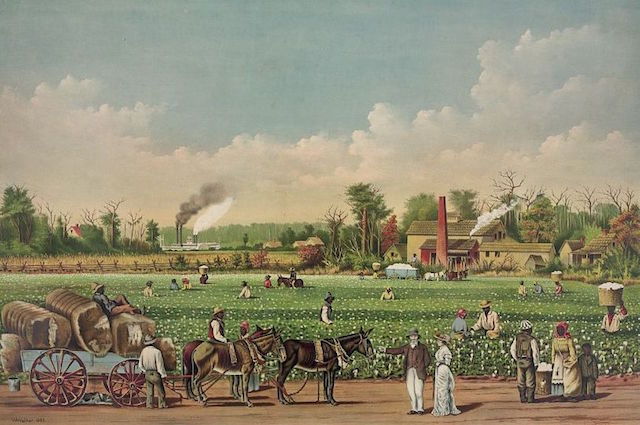
The History of Cotton in America |
|
|
|
The Origins of Cotton in AmericaThe production of cotton is an industry deeply rooted in the fabric of America's history, particularly in the south. In 1556, the first settlers grew cotton in southern Florida and used it to make homespun clothing. In order to grow properly, cotton requires a warm climate, so the American south is the ideal place for it to be harvested. In the 1730s, England began using American cotton as part of its clothing industry. The cotton from the American south was shipped overseas so the English could spin it into clothing and textiles. Invention of the Cotton GinCotton is not an easy crop to grow, however; it has to be picked and all of its seeds have to be removed. Until the late 1700s, this task required hours of manual labor. However, in 1793, Eli Whitney invented the cotton gin: a machine that sped up the process of separating cotton from its seeds by a factor of ten. Whitney's invention made it significantly easier to mass-produce cotton and make money from it, causing the American cotton industry to grow from an annual revenue of 150,000 to 8 million dollars. And with the money, the greed of cotton planters grew. Planters needed more workers in their fields to harvest more cotton and make even more money. Those workers came in the form of slaves forcibly taken from Africa and made to work for no pay in the southern heat. Slave labor increased in cotton fields in the 1800s, powering the cotton industry and the selling of textiles. In the 1830s and 1840s, one slogan captured the growth of the American economy: "cotton is king." Cause of the Civil WarThe harsh treatment of slaves in cotton fields led to unrest. Many northern abolitionists felt that slave labor was inhumane and should end. Southern plantation owners were big supporters of slavery, since without it, cotton production would collapse. Cotton was the biggest crop in the south; if there weren't enough hands in the field to produce it, the southern economy would hit rock bottom. Because of this, tensions continued to increase between northern and southern America, making the cotton crop one of the major causes of the American Civil War from 1861-1865. After the war, northern victory, and freeing of slaves, the cotton industry took a major hit. In 1892, cotton bud-eating beetles known as boll weevils came into the south from Mexico, destroying cotton crops. By the time measures were put in place to stop the weevils in the 1950s, the industry had already lost over 22 billion dollars. Today, the cotton clothing industry is still strong in the United States: a grim reminder of the time when both cotton, and slave labor, were king.
Discussion Questions
Glossary
The Origins of Cotton in AmericaCotton has been an important part of American history, especially in the South. The first settlers grew cotton in Florida in 1556 to make homemade clothes. Since cotton needs warm weather, the southern colonies were perfect for growing it. By the 1730s, England was using American cotton to make clothes and fabrics. The Invention of the Cotton GinPicking cotton and removing the seeds by hand was hard and took a long time. In 1793, Eli Whitney invented the cotton gin, a machine that removed seeds from cotton much faster. This made cotton much easier to produce and led to a huge increase in cotton farming. To grow more cotton, plantation owners used more enslaved people to work in the fields without pay. Cotton made a lot of money, and by the 1830s and 1840s, people said, "Cotton is king." Cotton and the Civil WarMany people in the North believed slavery was wrong. But Southern plantation owners needed slavery to grow enough cotton to keep their economy strong. This disagreement helped lead to the Civil War in 1861. After the war and the end of slavery, the cotton industry suffered. In 1892, insects called boll weevils began destroying cotton plants. The bugs caused huge losses until better pest control arrived in the 1950s. |
|
| Cotton Activities | |
|