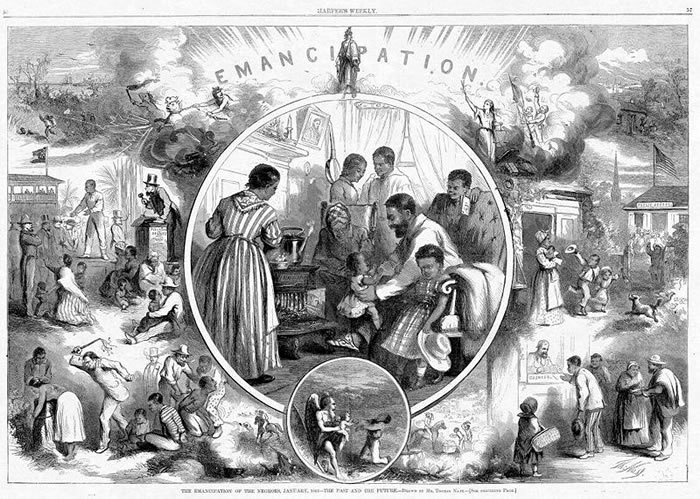
The Emancipation Proclamation |
|
Battle of AntietamOn September 17, 1862, 75,000 Union troops under the command of George McClellan, clashed with about 40,000 Confederate troops under the command of Robert E. Lee at Sharpsburg, Maryland. The horrible battle, which was the bloodiest day in American history, became known as the Battle of Antietam because of the creek (Antietam Creek) that ran through the battle site. The landmark battle was not a military victory for either side, but rather a moral and tactical victory for the North. Lee's exhausted Army of Northern Virginia was forced to retreat to the Virginia side of the Potomac River. General McClellan, however, failed to order pursuit of the fleeing Confederates, which ultimately allowed them to regroup. Opportunity for LincolnDespite the inconclusive nature of the battle, president Abraham Lincoln declared the battle a significant victory of the Union. For months, he had been waiting for just such an outcome to make sure the emancipation of the slaves was not viewed as a desperate attempt to reverse the momentum of the war. Lincoln's victorious assertion was important for Northern morale because of significant defeats in Virginia, and increasing criticism from "Copperheads," Democrats who favored peaceful negotiations with the South. Furthermore, the Battle of Antietam provided an opportunity for president Lincoln to free all slaves still subjugated in the South. Five days after the battle, on September 22, 1862, Lincoln issued the Emancipation Proclamation which freed all slaves in "enemy territory" as of January 1, 1863. The announcement was hailed by abolitionists (people who opposed slavery). However, it is important to note that the new law did not free slaves being held in the border states of Delaware, Maryland, Kentucky, and Missouri. Lincoln was concerned that the issuance of a universal emancipation of all slaves would persuade those states to secede from the Union and join the Confederacy. Discussion Questions
The Battle of AntietamOn September 17, 1862, Union troops led by George McClellan fought Confederate troops under Robert E. Lee in Sharpsburg, Maryland. The battle, known as the Battle of Antietam, was the bloodiest single day in American history. Though it was not a clear victory for either side, Lee’s army was forced to retreat. However, McClellan did not chase the Confederate army, allowing them time to recover. A Turning Point for the UnionPresident Abraham Lincoln called the battle a Union victory, even though it was not a full military win. He had been waiting for a positive moment to issue the Emancipation Proclamation, so it wouldn’t seem like a desperate move. This helped boost morale in the North, especially after recent defeats and growing criticism from Northern Democrats who wanted peace. The Emancipation ProclamationJust five days after the battle, on September 22, 1862, Lincoln announced the Emancipation Proclamation. It said that all slaves in the rebellious Southern states would be free starting January 1, 1863. Abolitionists celebrated the news, but the proclamation did not apply to slaves in the border states of Delaware, Maryland, Kentucky, and Missouri. Lincoln worried that fully ending slavery might push those states to join the Confederacy. |
| Emancipation Proclamation Activities |
|