The Trent Affair |
|
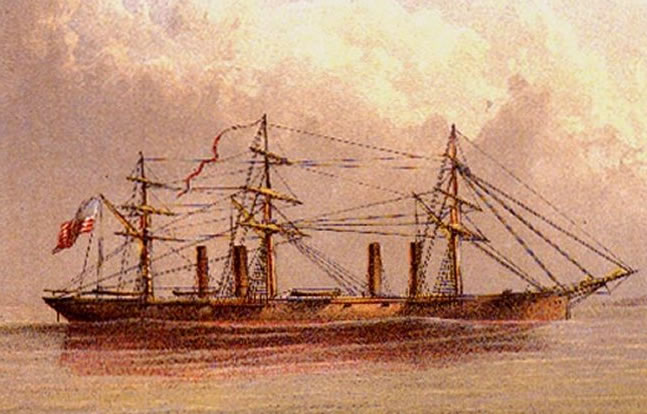
Could the Confederacy be Recognized by Foreign Nations?During the American Civil War, the North held major economic, manufacturing, and manpower advantages over the South. For the Confederacy to win the war, they would likely have to depend on foreign help. Officials in the Confederacy hoped that European powers such as Great Britain and France, both of which traded extensively for Southern cotton and textiles, would recognize the Confederacy as an independent nation, or, would declare war on the United States. The Capture of Mason and SlidellAt the onset of the war, Great Britain issued a proclamation of neutrality, though they considered the division of the United States to be an inevitable conclusion. Because they considered the Confederacy to be in a state of belligerency, the British Crown authorized all Confederate and British interactions in Great Britain with the exception of trade for weapons and ammunition. On November 8, 1861, U.S. Naval forces under the command of Charles Wilkes captured a British mail vessel returning to Great Britain in the Caribbean Sea. Wilkes captured and detained two Confederate agents, James Mason and John Slidell, who were travelling to England in an attempt to persuade the British Crown to recognize the Confederacy as a sovereign nation. When the news hit the Northern presses on November 16th, support for the seizure was nearly universal, though its legality soon came into question in the North. Parliament is Outraged!In Great Britain, Parliament (British government) was outraged. Most viewed the seizure of a British vessel in international waters as an insult to their national honor and a violation of maritime (sea) laws. In their official response to the seizure, British officials demanded the immediate release of the prisoners as well as an apology and declared it an act of war. British financial markets declined rapidly as the threat of war between England and the United States intensified. Furthermore, British military officials sent over 17,000 soldiers to Canada to prepare for combat and to possibly invade the state to Maine, which the British believed, may have been agreeable to being annexed by Canada. Diplomacy PrevailsDespite the intensification of hostilities, President Abraham Lincoln and his advisors eventually relented and claimed Wilkes acted without orders. The two British agents, Mason and Sildell, were released and allowed to complete their trip to Great Britain and arrived on January 8, 1862. The two agents were unable to convince British officials to recognize the Confederacy as a sovereign nation. Lincoln never issued a formal apology, but his diplomacy averted a war with Great Britain, enabling the United States military to concentrate their efforts in subduing the South. Discussion Questions
Foreign Help for the SouthDuring the Civil War, the Northern states had more people, factories, and resources than the South. To win, the South hoped for help from foreign countries like Great Britain and France, who bought a lot of Southern cotton. Southern leaders wanted these countries to recognize the Confederacy as a new nation or even join the war on their side. The Capture of Mason and SlidellEarly in the war, Great Britain stayed neutral but allowed the Confederacy to have some contact with them. On November 8, 1861, a U.S. Navy ship stopped a British mail ship in the Caribbean and took two Confederate agents, James Mason and John Slidell. They were on their way to ask the British government for help. Many people in the North supported the capture at first, but some questioned whether it was legal. Britain Reacts with AngerThe British government was very upset. They saw the capture of their ship as an insult and a break of sea laws. They demanded the agents be released and even sent 17,000 soldiers to Canada in case war broke out. Some British leaders believed that parts of the U.S., like Maine, might even want to join Canada. Peaceful SolutionPresident Abraham Lincoln and his team decided to release Mason and Slidell, saying the officer who captured them acted on his own. The agents were allowed to continue to Britain, arriving in January 1862. However, they failed to get Britain to recognize the Confederacy. Lincoln avoided war with Britain, allowing the U.S. to stay focused on fighting the South. |