Teton Sioux Territory |
|||
|
|||
|
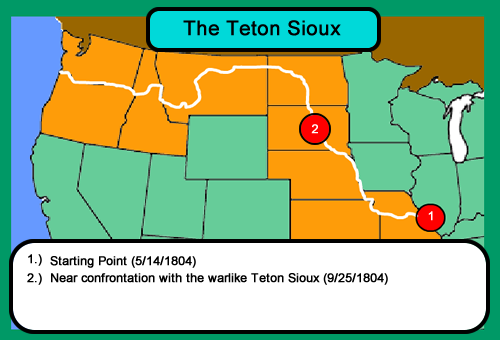
As the Corps entered the Great Plains, new animals previously unknown such as the coyote and antelope were recorded for the first time. In addition, it was in South Dakota where Lewis and Clark first recorded large herds of buffalo that came to symbolize the Great Plains. As the Corps sailed north, they met up with the Teton Sioux Indians near present-day Pierre, South Dakota. The Teton Sioux had previously been documented as powerful and aggressive by French fur-traders and often required payments or tributes to traders or other native groups for safe passage up the river. When the Corps first encountered the Teton Sioux, they attempted to demonstrate power and might by firing one of their air guns and parading in uniform. The Teton Sioux, however, were neither frightened nor impressed, and demanded one of Corps' boats as a toll for moving farther upriver. A fight nearly ensued, but was defused by the diplomacy of a chief named Black Buffalo after the Corps of Discovery offered tobacco as a tribute. For three more anxious days, the expedition stayed with the tribe, where there were celebrations, misunderstandings, and an overall lack of communication, as neither side properly understood the other. During this time, William Clark took detailed notes about the Teton Sioux, remarking that they were generally thin and ill-looking in appearance. He also took notes describing a "scalp dance" performed by the tribe after a war victory over the rival Omahas.
Discussion Questions
Back | NEXT: Winter with the MandansEncounters on the Great PlainsAs the Corps of Discovery entered the Great Plains, they began to encounter animals never before documented by science, including the coyote and antelope. In present-day South Dakota, they recorded massive herds of buffalo—an animal that would come to symbolize the vast grasslands of the American frontier. Meeting the Teton SiouxWhile sailing north along the Missouri River, the Corps met the powerful and often aggressive Teton Sioux near present-day Pierre, South Dakota. Known to demand tribute for safe passage, the Teton Sioux were unimpressed by the Corps' displays of strength and demanded one of their boats as payment. A tense standoff was defused through diplomacy and the offering of tobacco, thanks to a chief named Black Buffalo. The Corps stayed with the tribe for three uneasy days marked by cultural misunderstandings, celebration, and observation. Clark’s ObservationsWilliam Clark recorded detailed notes about the Teton Sioux, describing them as generally thin and ill in appearance. He also observed a "scalp dance," a ceremonial celebration performed after a victory over their Omaha rivals. These records provided some of the earliest written descriptions of Plains tribal customs by Americans. Did You Know?The Corps of Discovery recorded over 300 new species of plants and animals during their expedition, including the Western Meadowlark. Back | NEXT: Winter with the Mandans
|