The Columbia River

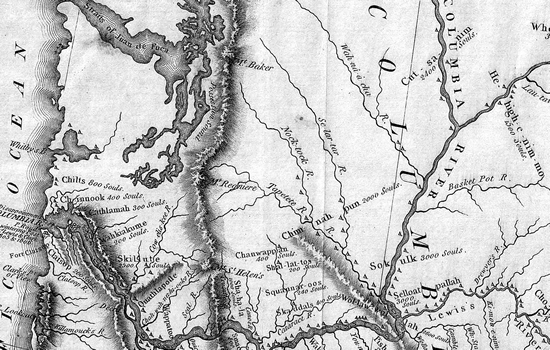
Lewis and Clark map of the Columbia River

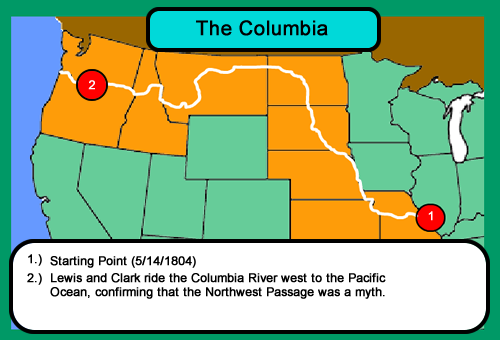
On October 7, 1805, the Corps of Discovery, with newly built canoes, emerged from the towering Bitterroots and set sail with a westward current along the Clearwater River. On October 10, the Corps reached the Snake River, before reaching the Columbia River on October 16th. The Corps then sailed with the Columbia, stopping to portage around treacherous portions of the Cascades Range, the last of the mountains between them and the Pacific Ocean.

On November 7, 1805, Meriwether Lewis thought he saw the Pacific Ocean. In reality, it was the estuary of the Columbia. By the time they realized their actual location, the weather had turned. Bad weather and high waters trapped the Corps at Point Ellice. Overhanging rocks made it impossible for them to travel anywhere, including to hunt. Luckily, they were able to trade for food with the local Clatsop Indians, who were able to cross the estuary in their heavy coastal canoes.

Finally, on November 15, 1805, Lewis and Clark saw the Pacific Ocean. This observation confirmed that the Northwest Passage, the discovery of which was one of the central points of the entire journey, did not exist. Nevertheless, Lewis and Clark established a "station camp" situated near a Chinook fishing village that had been abandoned for the winter. The Corps spent ten days at the station camp fishing, hunting, and trading with Chinook and Clatsop peoples. At nearby, Cape Disappointment, one of the members of the Corps killed a "remarkably large buzzard" feeding on a whale carcass. This buzzard was undoubtedly a California Condor, one of America's most endangered animals. The California Condor, once common along the entirety of the west coast, is only found today in a small portion of eastern California and Arizona.

On November 20th, the camp was visited by a pair of important Chinook chiefs, who traded otter-fur robes for a belt of blue beads worn by Sacagawea. The Chinook were used to trading with Whites and had become skilled negotiators. Lewis remarked in his journal that many Chinook seemed afflicted with "European-introduced" diseases such as Smallpox. Nearly 75% of the Chinook nation would be dead in the next two decades of Smallpox and other European diseases.

Lewis and Clark and the Columbia River


Did you know?

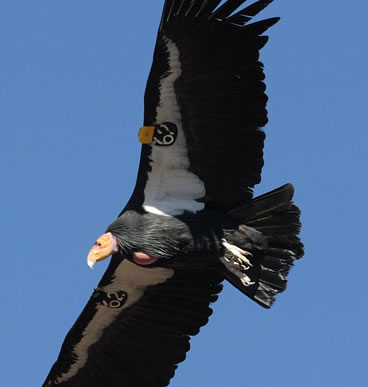
California Condor

The California Condor is the largest bird found in North America. With a wingspan that can stretch to ten feet in length, the condor is highly endangered and has avoided extinction only because of captive breeding programs undertaken in Arizona and California.

Discussion Questions

  1. Why was the mistaken sighting of the Pacific significant to the goals of the expedition?
  2. How did the Clatsop and Chinook peoples help the Corps of Discovery during their time at the Columbia River estuary?
  3. What does the interaction with Chinook chiefs reveal about their experience with European traders?
  4. How did European diseases like smallpox impact Native populations along the Pacific Coast?

Back | Next: Fort Clatsop

Reaching the Pacific

On October 7, 1805, the Corps of Discovery emerged from the Bitterroot Mountains and began sailing west down the Clearwater River in newly built canoes. By October 16, they had reached the Columbia River and began navigating its powerful current, portaging around dangerous parts of the Cascades Range—the final mountain barrier before the Pacific.

Trapped at the Estuary

On November 7, Meriwether Lewis mistakenly believed he had reached the Pacific Ocean, but the Corps was actually at the Columbia estuary. Soon after, severe storms and high waters trapped the expedition at Point Ellice, where overhanging rocks prevented travel. The local Clatsop Indians helped by trading food, using their coastal canoes to cross the turbulent estuary.

First View of the Pacific

On November 15, 1805, Lewis and Clark finally saw the Pacific Ocean, confirming that the long-sought Northwest Passage did not exist. They established a “station camp” near an abandoned Chinook fishing village and spent ten days hunting, fishing, and trading with the Chinook and Clatsop peoples. During this time, a Corps member killed a large bird feeding on a whale carcass at Cape Disappointment—likely a California Condor, now critically endangered.

Contact with the Chinook

On November 20, two important Chinook chiefs visited the camp, trading otter-fur robes for Sacagawea’s blue bead belt. The Chinook, experienced in trade with Europeans, drove hard bargains and were already suffering from diseases such as smallpox. Within two decades, as much as 75% of the Chinook population would perish due to European-introduced illnesses.

Back | Next: Fort Clatsop