The Bitterroots

Twisted Hair

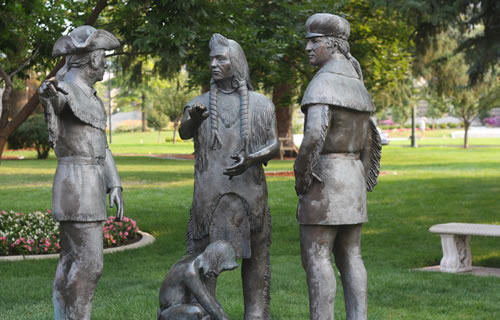
Lewis, Clark, and Twisted Hair at Traveler's Rest near Boise, Idaho

Now that the Corps had acquired horses and supplies, from the Shoshone, they could begin the difficult task of trekking over cliffs and mountains. As expected, the trip was treacherous. The horses were in constant danger of slipping on the narrow routes atop tall cliffs. There were virtually no animals to hunt, and the expedition ran out of salt pork on September 3rd. During their trip through the mountains, the Corps would cross over the Continental Divide, the point at which river and streams flow westward toward the Pacific. Once they could get back on the water, their trip to the Pacific Ocean would be easier because they'd be sailing with the current. Eventually, the Corps made it to the valley of the Bitterroots, where they were able to trade for more horses with the Nez Perce Indians before attempting to cross the Bitterroots. On September 10, the Corps rested at a location known as Traveler's Rest, where they collected badly needed game as well as three Nez Perce natives who agreed to guide them over the Bitterroots.

Unfortunately for the Corps of Discovery, two guides abandoned them. The guide that remained with them, called Old Toby, attempted to lead the Corps through the Bitterroots via the Nez Perce Trail but became confused and disoriented. In the meantime, rain, hail, and as much as eight inches of snow fell upon the travelers. On September 17, several starving horses strayed from the camp. It took all morning to round them up. The men too were starving and near the limits of their physical endurance. The Corps resorted to eating the horses – but soon there were no more horses to eat. William Clark and several hunters were sent ahead to the plains in the hopes of finding game to send back to the main camp. After four days, one of the hunters returned to the main camp with fish and dried roots obtained by Clark from the Nez Perce Indians. That evening Clark and the rest of the hunters returned to camp.

Clark returned with vital information. He had met a Nez Perce chief named Twisted Hair who described the waterways that led to the falls of the Columbia River (the river the Corps knew led to the Pacific). The chief told Clark it was a ten day trip from his village to the destination. Twisted Hair also showed Clark how to make canoes more efficiently and agreed to watch the horses until they returned the following spring. 


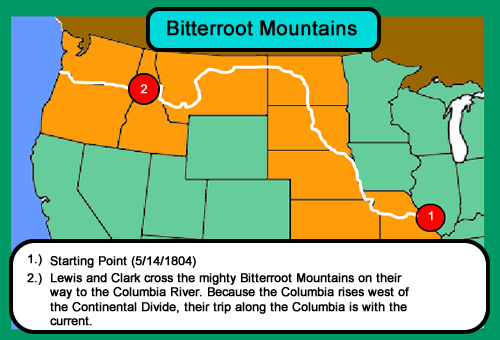
Map


Did You Know?


Continental Divide

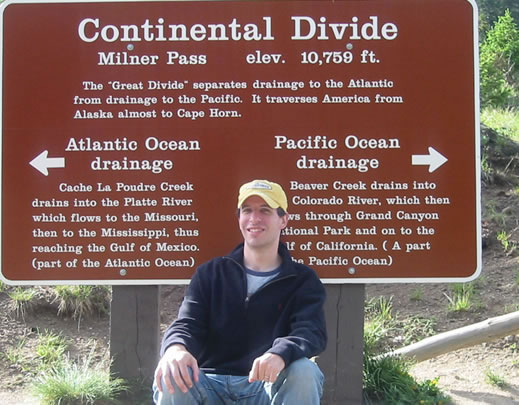
Mr. Nussbaum at the Continental Divide in Colorado

The Continental Divide is an invisible divide that runs through the Rocky Mountains. Precipitation that falls east of the divide theoretically ends up in the Atlantic Ocean, while precipitaiton that walls west of the divide ends up in the Pacfiic Ocean. Here is a picture of me on the Continental Divide in Colorado.

Discussion Questions

  1. What challenges did the Corps of Discovery face while crossing the Bitterroot Mountains?
  2. How did the help from Native American tribes like the Shoshone and Nez Perce impact the success of the expedition?
  3. Why was the Continental Divide an important part of the journey?
  4. What does the story of Old Toby and the guides teach us about navigation and survival in unknown lands?

Back | Next: The Columbia River

Crossing the Rocky Mountains

With new horses and supplies from the Shoshone, the Corps of Discovery began the hard journey over the Rocky Mountains. The cliffs were steep and dangerous, and food became very scarce. On September 3, they ran out of salt pork and had little to hunt. They crossed the Continental Divide, which meant that rivers now flowed west toward the Pacific Ocean. Once they reached water, travel would be easier because they could go with the current.

Help from the Nez Perce

In the Bitterroot Valley, the Corps traded with the Nez Perce tribe for more horses. On September 10, they stopped at Traveler’s Rest to hunt and rest. They also received help from three Nez Perce guides to cross the Bitterroot Mountains. Unfortunately, two of the guides left, and the one who stayed—Old Toby—got lost on the trail.

Snow and Hunger in the Bitterroots

The Corps faced rain, hail, and snow—up to eight inches deep. They were cold, hungry, and exhausted. Some horses wandered off, and the men had to eat the remaining ones to survive. William Clark led a hunting group ahead to search for food. After four days, they brought back fish and dried roots given to them by the Nez Perce.

A Path to the Pacific

Clark met a Nez Perce chief named Twisted Hair. The chief explained how to reach the Columbia River, which flows to the Pacific Ocean. He said it would take ten days to reach the falls. Twisted Hair also taught Clark a faster way to build canoes and agreed to care for the Corps' horses until they returned in the spring.

Back | Next: The Columbia River