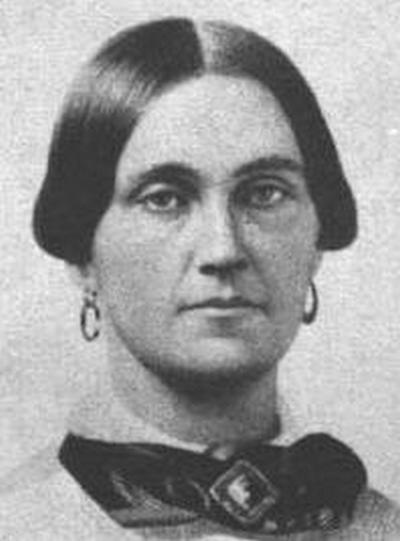
The Execution of Mary Surratt - Just or Unjust? |
|
|
IntroductionOn July 7, 1865, Mary Surratt became the first woman in American history to be executed. Along with co-conspirators in the Lincoln assassination: Lewis Powell, David Herold, and George Atzerodt, Surratt was hung from the gallows at the Washington Arsenal. John Wilkes Booth, the mastermind behind the plot to murder Lincoln, Secretary of State William H. Seward, and Vice-president Andrew Johnson, had been hunted down and killed on April 26th. Surratt's guilt or knowledge in the plot has long been the subject of intense debate. Did she deserve to die? What do we know?We know that Mary Surratt owned a boardinghouse in Washington, D.C., and that she was acquainted with John Wilkes Booth. In addition, in the days before the assassination, Booth gave her a package that contained binoculars and another that contained guns. Surratt delivered these packages to her Maryland boarding house and instructed John Lloyd to prepare the "shooting irons" to be picked up. We also know that Surratt's son, Confederate spy John Surratt Jr., agreed to participate in an earlier plot that Booth devised to kidnap President Lincoln and bring him to Richmond. Mary probably knew her son was a spy, but to what extent she knew of either the plan to kidnap President Lincoln, or assassinate him, remains unclear. Additionally, we know that Lewis Powell, David Herold, and George Atzerodt, all stayed at or visited Surratt's boardinghouse in the days and weeks before the assassination. Finally, we know that Surratt lied to investigators about knowing Lewis Powell, who showed up at her boardinghouse following the assassination while she was being interrogated by investigators. She also told the investigators that her son had been in Canada for two weeks, as he was a focal point of the investigation. Despite her efforts to lie to protect John, he would fail to repay the favor and instead fled to Canada in an attempt to avoid capture. For this, he was labeled a coward for the rest of his life. He would eventually be captured, but avoided jail time. Evidence MountsCircumstantial evidence began to mount against Mary, although no "smoking gun" would ever emerge. She was arrested and her trial began on May 9th. Surratt, Herold, Powell, Atzerodt, Dr. Samuel Mudd, and four others, were tried together in a military court. Surratt was charged with aiding, abetting, concealing, counseling, and harboring the co-defendants. The testimony of John Lloyd, who revealed that Mary told him to have "shooting irons" ready at the boarding house for Booth was particularly damaging to Mary. The testimony of boarder Louis Weichman, who claimed to have overheard Mary's son having conversations with Booth, Powell, and Atzerodt, many times in the four and a half months before the assassination was also very damaging. Weichman revealed the connections between the Surratt family and the Confederate spy network of Maryland. The VerdictDespite the unreliable witnesses that testified against Mary, she was found guilty on all but two charges and sentenced to death. Five of the nine judges in the case petitioned President Andrew Johnson for Mary's sentence to be commuted to life in prison because of her age and because she was a woman, but Johnson either never saw the petition or refused to sign it. Lewis Powell, who was also sentenced to death, swore that she was completely innocent before his death, although George Atzerodt implicated her further before his death. Discussion Questions
IntroductionOn July 7, 1865, Mary Surratt became the first woman in U.S. history to be executed. She was hanged along with Lewis Powell, David Herold, and George Atzerodt for being involved in the plot to kill President Abraham Lincoln. The leader of the plot, John Wilkes Booth, had already been killed on April 26. People have long debated whether Mary truly deserved to die for her role.What We KnowMary Surratt owned a boardinghouse in Washington, D.C., and knew John Wilkes Booth. Before the assassination, Booth gave her packages—one with binoculars, another with guns—which she delivered to her other boardinghouse in Maryland. She told a man named John Lloyd to have the guns ready to be picked up. Her son, John Surratt Jr., had helped Booth plan to kidnap Lincoln earlier and was a known Confederate spy. Powell, Herold, and Atzerodt all visited Mary’s boardinghouse in the weeks before the assassination. After the assassination, Mary lied to investigators about knowing Powell and also about where her son was. John Surratt Jr. ran away to Canada and didn’t help his mother, which many thought was cowardly.Evidence BuildsThere was no clear proof that Mary helped plan the assassination, but a lot of clues made her look guilty. She went on trial with the other suspects on May 9. Witnesses claimed she helped hide and support the men who carried out the plan. John Lloyd said she told him to have guns ready for Booth. Another man, Louis Weichman, said he heard her son talking with Booth and others many times. He also said the Surratt family had strong ties to Confederate spies.The VerdictEven though the witnesses against her were not all reliable, Mary was found guilty on most charges. She was sentenced to death. Five of the nine judges wanted her sentence changed to life in prison because of her age and because she was a woman. But President Andrew Johnson didn’t approve the request—possibly because he never saw it. Lewis Powell said Mary was innocent before he died, but Atzerodt said she was involved. |