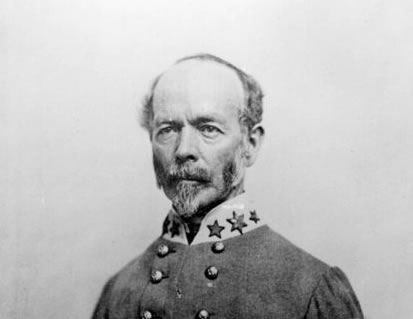
Joseph Johnston |
|
Joseph Johnston was born on February 3, 1807 near Farmville, Virginia. Johnston was educated at the United States Military Academy and came from a military family. His father fought in the Revolutionary War and even named his son after Major Joseph Eggleston. Joseph Johnston first made a name for himself in the military community when he fought in the Mexican-American War. First Commander of Confederate ForcesJohnston was one of the highest ranking general officers in the Confederate Army at the onset of war. He served as Confederate commander in the first Battle of Bull Run and during part of Union General McClellan's Peninsula Campaign. Confederate President Jefferson Davis, however, was highly critical of Johnston’s command and believed he was too passive in battle. Johnston was relieved of his command on several occasions during the Civil War. One of the Last Armies to SurrenderIn 1862, Johnston was wounded by an artillery shell in the chest and shoulder at the Battle of Seven Pines as part of Union General McClellan’s Peninsula campaign. Although the battle was considered a draw, Jefferson Davis replaced him with General Robert E. Lee, who commanded the main branch of the Confederate Army for the remainder of the war, and became a legendary figure in the South. Johnston was given command of smaller armies for the duration of the war until his final surrender to Union Major General William Sherman at Durham Station in North Carolina. Johnston’s army was one of the last to surrender and was considered the last hope for the Confederacy after Lee surrendered at Appomattox Courthouse. Representative to VirginiaAfter the war was over, Joseph Johnston became a member of the U.S. House of Representatives for Virginia. Johnston was also appointed Commissioner of Railroads by U.S. President Grover Cleveland. Like several other Confederate generals, Johnston would become close friends with Union generals Grant and Sherman. At the age of 84, Johnston died of pneumonia in Washington D.C. after serving as a pall bearer at Sherman's funeral. Johnston is now buried in Green Mount Cemetery in Baltimore, Maryland. Discussion Questions
Early Life and Military BackgroundJoseph Johnston was born on February 3, 1807, near Farmville, Virginia. He came from a military family—his father fought in the Revolutionary War and named him after a fellow officer. Johnston studied at the U.S. Military Academy and gained recognition during the Mexican-American War. Leading the Confederate ArmyAt the start of the Civil War, Johnston was a top general in the Confederate Army. He led troops at the First Battle of Bull Run and during Union General McClellan’s Peninsula Campaign. However, Confederate President Jefferson Davis thought Johnston was too cautious and removed him from command multiple times. Injuries and Final SurrenderJohnston was badly wounded at the Battle of Seven Pines in 1862. Afterward, he was replaced by Robert E. Lee. Johnston later led smaller Confederate forces and eventually surrendered to Union General William Sherman in North Carolina, making his army one of the last to surrender in the war. Life After the Civil WarAfter the war, Johnston served as a U.S. Representative from Virginia and later became Commissioner of Railroads. He formed friendships with former Union generals, including Sherman and Grant. Johnston died of pneumonia in Washington, D.C., at age 84 and was buried in Baltimore, Maryland. |