The Ostend Manifesto |
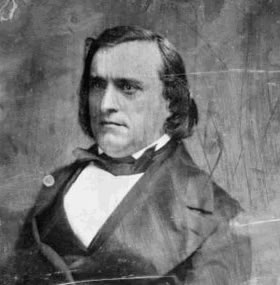
Pierre Soule |
Negotiating for the Island of CubaThe Ostend Manifesto was a secret document written by American diplomats in 1854 at Ostend, Belgium. The manifesto outlined a plan for the United States Government to acquire the island of Cuba from Spain. Located only 150 miles from Miami Florida, many American expansionalists believed the America had the "right" to Cuba. Making Enemies in Europe; Outrage in the NorthThe diplomats, Pierre Soule, James Mason, and James Buchanan, were all staunch advocates of slavery and expansion. They threatened to obtain Cuba by force if Spain refused to sell the island for $120 million. Soule, in particular, proved extremely antagonistic and was said to have spearheaded the threatening tone of negotiations. The threat, which the diplomats were not authorized to make, soured relations between the United States and Spain and resulted in immediate rejection in England, France, and Spain. The United States Secretary of State, William Marcy was forced to unconditionally repudiate the manifesto. When word of the manifesto leaked, it created a great controversy in the northern states. Because the diplomats were well-known advocates of slavery, Northern politicians and abolitionists expressed outrage and decried the manifesto as an attempt to extend slavery. Southerners generally advocated the manifesto because many believed that Cuba would become an independent Black republic. The incident further strained relations between politicians in the North and the South, and brought the nation one step closer to Civil War. Discussion Questions
Trying to Buy CubaThe Ostend Manifesto was a secret document written in 1854 by American diplomats in Belgium. It suggested that the United States should buy Cuba from Spain. Some Americans believed the U.S. had a right to own Cuba, which is only 150 miles from Florida. Trouble with Europe and the NorthThe three diplomats—Pierre Soule, James Mason, and James Buchanan—supported slavery and expansion. They said that if Spain refused to sell Cuba for $120 million, the U.S. should take it by force. This threat was not approved by the U.S. government and made European countries angry. Secretary of State William Marcy rejected the document completely. Northern OutrageWhen the public learned about the Ostend Manifesto, it caused a big reaction in the North. Many people thought it was just a plan to spread slavery. Southerners mostly supported the idea because they didn’t want Cuba to become an independent Black republic. More Division Between North and SouthThe event made the tensions between Northern and Southern politicians even worse. It brought the country closer to the Civil War. |