The Nat Turner Rebellion - 1829 |
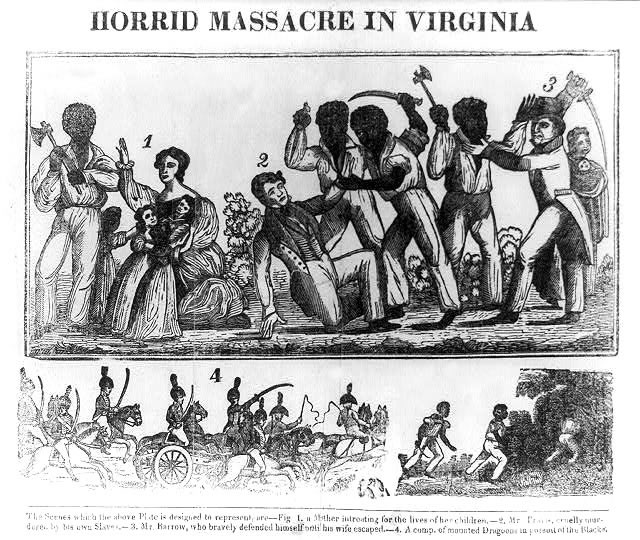
The "Prophet" and the "Serpent"The Nat Turner Rebellion was a slave insurrection that occurred in Southampton County, Virginia, in 1831. The insurrection was started by Nat Turner, a highly educated and religious man who had taught himself to read and write. Turner was prone to receiving "visions," which he thought were messages from God. His “visions” gradually became more and more violent and led him to believe that his purpose was to dispatch of the evils of slavery and the White man. Other slaves referred to him as "Prophet," and he often gave rousing sermons. On February 12, 1831, Turner witnessed a solar eclipse. He interpreted the eclipse as a sign from God that he should "take it on and fight against the Serpent." The "Serpent" represented the White man and the practice of slavery. Turner soon recruited other slaves and planned a massive insurrection. The Horrid MassacreOn August 21, the rebellion began. The marauders traveled from plantation to plantation killing as many white people as they could with knives, axes, and hatchets. The bloody rebellion resulted in the deaths of 57 white people, many of whom were young children. The insurrection was quelled by a large militia, reinforced by three companies of militia. By the time the rebellion was finally over, at least 100 Black people were killed, including the rebels and many innocent Blacks who had nothing to do with the rebellion. For weeks after the rebellion, scores of Blacks were killed in Virginia and North Carolina in retaliation. Nat Turner himself eluded capture for months and was finally found hiding in a swamp on October 30, 1831. He was hanged on November 11. The Nat Turner Rebellion resulted in laws that restricted religious assembly for slaves (without the presence of a White minister) and for teaching slaves to read or write. Discussion Topics
The "Prophet" and the "Serpent"The Nat Turner Rebellion was a slave uprising that took place in 1831 in Southampton County, Virginia. It was led by Nat Turner, a smart and deeply religious man who taught himself to read and write. Turner believed he received messages from God through visions. Over time, these visions convinced him that he was meant to fight against slavery and the white people who supported it. Other slaves called him "Prophet," and he often gave powerful sermons. After seeing a solar eclipse on February 12, 1831, Turner took it as a sign from God to begin the fight. He believed the "Serpent" in his vision stood for white people and slavery. Soon after, he began organizing a large rebellion with other slaves. The Horrid MassacreThe rebellion began on August 21, 1831. Turner and his group went from one plantation to another, killing white people using knives, axes, and hatchets. A total of 57 white people were killed, including many children. The uprising was stopped by a large group of soldiers. In total, about 100 Black people were killed—some were rebels, but many had nothing to do with the rebellion. Over the next few weeks, more Black people were killed in Virginia and North Carolina in revenge. Turner avoided capture for two months but was finally found hiding in a swamp on October 30 and hanged on November 11. After the rebellion, new laws were passed that made it illegal for slaves to meet for religious services without a white minister present and to learn how to read or write. |