The Jay Treaty |
|
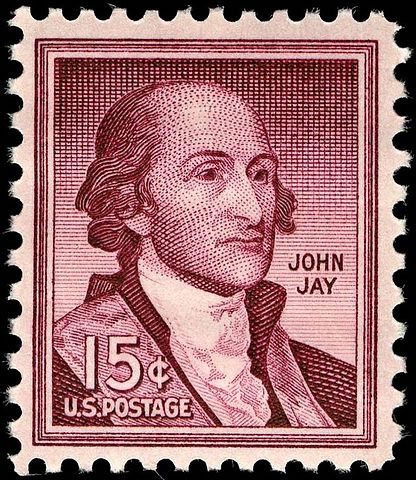
In 1794, the Jay Treaty was introduced in an attempt to solve political problems with England and to avert a second war. The treaty was designed mostly by Alexander Hamilton to address disagreements between the two nations concerning boundaries, debts, and the continued presence of British soldiers in northwestern forts. Republicans, who believed the Federalist treaty catered to British interests, decried it as an insult to the new nation and its credibility. Republicans further claimed that the Jay Treaty violated the 1778 Treaty of Alliance with France that was still in effect. Thomas Jefferson led the charge in denouncing Jay, Hamilton, and the Federalists as monarchists bent on bowing to the British Crown. While many historians view the Jay Treaty as more generous to the English, it resulted in relatively peaceful relations between the two nations for a period of about ten years. Public opinion concerning the Jay Treaty was initially negative, especially in the South. As part of the treaty, Southern slaveholders were not to be compensated for the loss of their slaves to British forces during the war. Nevertheless, Alexander Hamilton would eventually convince President Washington that the treaty was the best that could be expected and Washington, who nearly always sided with Hamilton, signed it. The treaty would officially go into effect on February 29, 1796 following Congressional approval. Learn more about: The Treaty of Alliance | John Jay | Alexander Hamilton The Jay Treaty was made in 1794 to fix problems between the U.S. and England and avoid another war. Alexander Hamilton helped create the treaty to solve disputes about borders, debts, and British soldiers still in U.S. forts. Republicans thought the treaty favored Britain and broke the old alliance with France. Thomas Jefferson strongly opposed it and criticized Hamilton and Jay. Most people, especially in the South, didn’t like the treaty at first, since it didn’t repay slaveholders for lost slaves taken by the British. Still, Hamilton convinced President Washington to support the treaty, and it was approved by Congress in 1796. Even though it helped Britain more, the treaty kept peace between the two countries for about ten years. |