The Southern Theater |
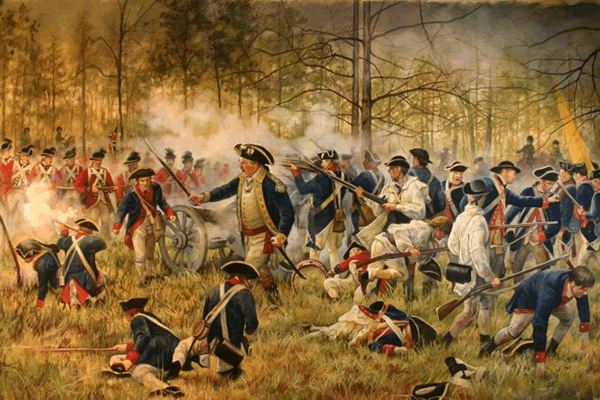
Why the War Moved SouthAfter several hard years of fighting in the North, the American Revolution shifted to the Southern colonies. British leaders believed the South would be easier to control because they expected many Loyalists (colonists loyal to Britain) to help them. They also wanted to protect valuable ports and trade routes. In 1778, the British began a “Southern Strategy,” hoping they could win key Southern cities, rebuild royal governments, and then move north again. Early British SuccessesThe British first captured Savannah, Georgia, in late 1778. This victory gave them an important harbor and a base for more attacks. In 1780, British forces moved against Charleston, South Carolina. After a long siege, Charleston fell, and thousands of American soldiers were captured. It was one of the worst American defeats of the war. For a time, it looked like Britain might succeed in the South. Fighting Turned into a “Backcountry War”Even though the British held major coastal cities, they struggled to control the countryside. In many areas, Patriot and Loyalist neighbors fought each other in sudden raids and ambushes. This kind of fighting was bitter and personal. Both sides tried to gain support from local communities, but violence often pushed people to choose sides—or to fear both armies. Patriot Leaders Change the MomentumAmerican commanders in the South learned they could not always defeat the British in large, direct battles. General Nathanael Greene used a strategy of wearing the British down. Instead of trying to hold every town, Greene avoided total destruction of his army. He forced the British to chase him and fight repeated battles that cost them men and supplies. At the same time, militia leaders like Francis Marion, nicknamed the “Swamp Fox,” used guerrilla tactics. Marion’s troops struck quickly and disappeared into marshes and forests. These raids disrupted British supply lines and made it harder for Britain to control the interior. Key Battles in the SouthSeveral Southern battles became turning points. In October 1780, Patriot militias defeated Loyalist forces at the Battle of Kings Mountain along the border of the Carolinas. This victory boosted Patriot confidence and weakened Loyalist support. In January 1781, Daniel Morgan led a smart Patriot victory at the Battle of Cowpens, using careful timing and strong militia tactics to overwhelm British troops. Later, in March 1781, the Battle of Guilford Courthouse in North Carolina was technically a British win, but it cost them so many soldiers that it harmed their campaign. British General Charles Cornwallis decided to move toward the coast for supplies and eventually marched into Virginia. Learn more about: The Siege at Charleston | Battle of Camden | Battle of Cowpens | Battle of Guilford Courthouse | Battle of Kings Mountain How the Southern Theater Helped End the WarThe long Southern campaign exhausted British forces. As Cornwallis moved into Virginia, American and French forces saw an opportunity. Cornwallis fortified at Yorktown, expecting help from the British navy. Instead, the French navy blocked British ships, and American troops under George Washington and French troops under the Comte de Rochambeau surrounded Yorktown. Cornwallis surrendered in October 1781. Learn more about the Siege at Yorktown The Southern Theater mattered because it weakened Britain’s army, drained resources, and helped set up the conditions for the victory at Yorktown. It also showed how different types of fighting—big battles, militia raids, and supply attacks—could work together to win a war.
What Was the Southern Theater?The “Southern Theater” was the part of the American Revolutionary War that happened mostly in Georgia, South Carolina, North Carolina, and Virginia. After fighting in the North, the British decided to focus on the South. They thought more people there would support the king and help the British win. British Victories at FirstIn 1778, the British captured Savannah, Georgia. Later, in 1780, they attacked Charleston, South Carolina. After a long siege, the Americans in Charleston had to surrender. Many Patriot soldiers became prisoners. For a while, it seemed like the British were taking control of the South. Hard Fighting in Towns and CountrysideEven though the British controlled some big cities, they had trouble controlling the countryside. Some colonists were Patriots, and some were Loyalists. In many places, neighbors fought neighbors. There were raids, ambushes, and sudden attacks instead of only large battles. Patriots Fight SmarterPatriot leaders used new strategies to slow down the British. General Nathanael Greene did not always try to win huge battles. Instead, he tried to keep his army safe while forcing the British to use up supplies and soldiers. Militia fighters also helped. Francis Marion, called the “Swamp Fox,” led quick surprise attacks and then escaped into swamps and forests. Important Southern BattlesPatriots won key battles that changed the war. At Kings Mountain (1780), Patriot militias defeated Loyalist forces. At Cowpens (1781), Americans used a smart plan to defeat British troops. Another battle, Guilford Courthouse (1781), cost the British many soldiers even though they claimed victory. Why the Southern Theater Was ImportantThe fighting in the South wore down the British army. British General Cornwallis moved into Virginia, where he later became trapped at Yorktown. In 1781, American and French forces surrounded Yorktown, and Cornwallis surrendered. The Southern Theater helped lead to this major victory, which helped end the war. |