Great Falls of the Missouri River

Great Falls of the Missouri River

On May 31, 1805, the Corps sailed past what is now known as the "White Cliffs of the Missouri," beautiful sandstone formations that resemble the ruins of an ancient city. Lewis wrote:

The bluffs of the river rise to the hight of from 2 to 300 feet and in most places nearly perpendicular; they are formed of remarkable white sandstone which is sufficiently soft to give way readily to the impression of water . . .


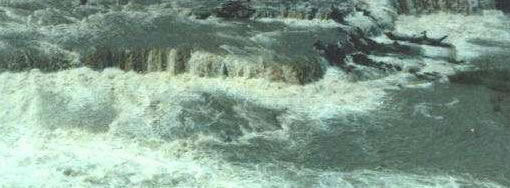
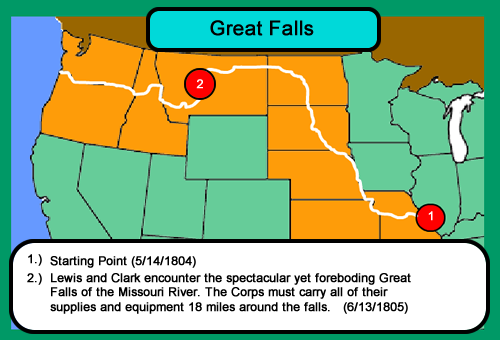
Three days later, the Corps sailed to a fork in the Missouri River, which they named the Marias River after one of Meriwether Lewis' cousins. After some initial confusion regarding which of the forks was the true Missouri River, the Corps chose the northernmost fork, which proved to be accurate. Eleven days later, Lewis beheld the Great Falls of the Missouri River, which he declared, " The grandest site [he]ever saw." While the falls were beautiful, there was no easy way for the expedition to get through them. The Corps was forced to make an arduous portage of more than eighteen miles around the falls.

The portage would prove to be one of the most difficult ordeals of the entire journey. Many in the Corps were forced to make the journey while sick, and most were plagued by swarms of mosquitoes and cactus-like plants called prickly pears, the spines of which constantly stuck in the feet of the travelers. Wild animals such as rattlesnakes, bears, mountain lions, and even wolverines were also a constant source of worry. William Clark, Toussaint Charbonneau, Sacagawea, and her baby were nearly drowned by a sudden, torrential storm that hurled large hailstones on them. Eventually, the Corps successfully moved all equipment and supplies via foot or wagon in scorching heat, around the falls, through rocky, unforgiving terrain. In his journal, Lewis praised his men for their toughness through such adversity:

 They are obliged to halt and rest frequently for a few minute. At every halt these poor fellow tumble down and are so much fortiegued that many of them are asleep in an instant. In short their fatiegues are incredible; some are limping from the soreness of their feet, others faint and unable to stand for a few minutes, with heat and fatiegue, yet no one complains. All go with cheerfulness . . 


Lewis and Clark meet the Teton Sioux


Did You Know?


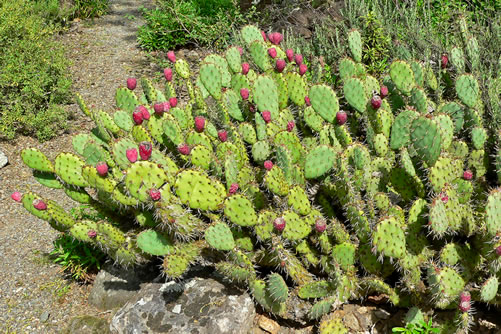
Prickly Pear

The Prickly Pear is a common species of cactus found in western North America. These small plants proved very troublesome to the hands and feet of members of the Corps of Discovery, particularly during the portage around the Great Falls of the Missouri River. When touched, numerous small hairs are dislodged from the plant that get stuck in the skin, causing significant pain.


Discussion Questions

  1. Why did the Corps have to carry their boats and supplies around the Great Falls?
  2. What made the portage around the falls so difficult for the expedition?
  3. How did Lewis describe the attitudes of his men during the tough journey?
  4. Why do you think Lewis called the Great Falls “the grandest sight” he had ever seen?

Back | NEXT: Shoshone Country

The White Cliffs of the Missouri

On May 31, 1805, the Corps of Discovery passed by the beautiful White Cliffs of the Missouri River. These white sandstone cliffs looked like the ruins of an ancient city. Lewis wrote that the cliffs were 200 to 300 feet tall and were easily shaped by water because the stone was soft.

The Fork in the River

Three days later, the Corps reached a fork in the river. They named one of the branches the Marias River, after one of Lewis's cousins. After some debate, they chose the northern fork, which turned out to be the correct path of the Missouri River. Eleven days later, Lewis saw the Great Falls of the Missouri and called it “the grandest sight” he had ever seen.

The Hard Portage

Although the falls were beautiful, they blocked the way, and the Corps had to carry all their boats and supplies around them for over 18 miles. The portage was one of the hardest parts of the whole trip. Many men were sick, mosquito-bitten, and had sore feet from stepping on sharp prickly pear plants. They also had to watch out for dangerous animals like snakes, bears, and mountain lions. A sudden storm nearly drowned Clark, Sacagawea, her husband, and their baby. Despite these hardships, the men worked hard and stayed positive. Lewis praised their strength, saying that many would fall asleep the moment they rested, but no one complained.

Back | NEXT: Shoshone Country