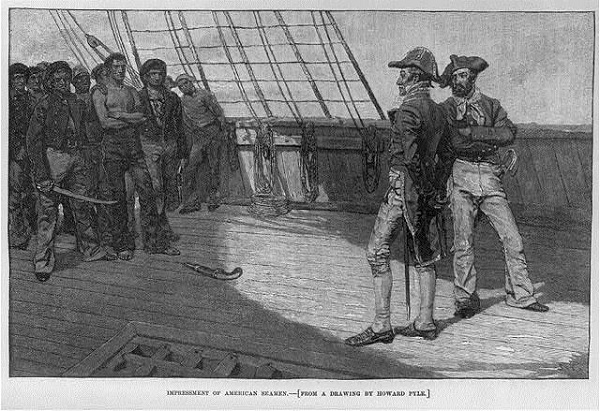
Impressment |
What Was Impressment?Impressment was the practice of forcibly taking men into military or naval service without their consent. Before the War of 1812, the British Royal Navy often stopped American ships and took sailors, claiming they were British deserters. This was a major source of tension between the United States and Great Britain. Why Did the British Impress Sailors?During the early 1800s, Britain was involved in a long war with France. The British Navy needed many sailors to keep up its strength. To fill their ranks, they impressed thousands of men, including Americans, believing that once a British subject, always a British subject—even if the person had become a U.S. citizen. Impact on American SailorsImpressment had a terrible effect on American sailors and their families. Many sailors were taken by force from American ships, often without proof that they were British. They were forced to work on British ships under harsh conditions. Over 6,000 Americans are believed to have been impressed between 1803 and 1812. The Chesapeake-Leopard AffairOne of the most famous impressment incidents occurred in 1807, when the British warship Leopard attacked the American ship Chesapeake. The British demanded to search the ship for deserters. When the American captain refused, the British opened fire, killing and wounding American sailors, then took four men by force. This incident outraged Americans and pushed the country closer to war. Impressment as a Cause of WarImpressment was one of the main reasons the United States declared war on Great Britain in 1812. Americans felt their national honor was being insulted, and they wanted to protect their sailors and their rights on the seas. The issue of impressment became a powerful rallying cry for those who supported the war. The Deadliest BattleThe Battle of New Orleans was the bloodiest battle of the War of 1812. It happened in January 1815, after the peace treaty had already been signed, but the news had not yet reached New Orleans. The British Suffer Heavy LossesOn January 8, 1815, over 10,000 British troops attacked American forces led by Andrew Jackson near New Orleans. Jackson's well-defended army, with help from pirates, defeated the British, killing their general and causing over 2,000 British casualties. Jackson Becomes a HeroEven though the battle did not change the outcome of the war, it made Andrew Jackson a national hero. His popularity helped him later become the President of the United States. |