Plymouth Colony |
||||||||||||||||||||||
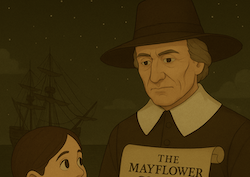
Escaping PersecutionPuritan separatists, desperate for religious freedom, left England in 1607 for the Netherlands under increasing pressure from the crown to conform. Although they were allowed religious freedom, they were not granted citizenship in the Netherlands, and hence, could not secure meaningful jobs and were restricted to those that were low-paying and unskilled. Some Puritans, disheartened by the drifting of their children from the church, made arrangements with the Merchant Adventurers (a London joint-stock company) to relocate to America. Payment for their passage was made in exchange for future repayment and a percentage of future profits made by the settlement. We Thought Virginia was the Destination!35 Pilgrims (as they would come to be known) boarded the Mayflower with 67 other passengers and set sail for Virginia on September 16, 1620. The treacherous voyage across the stormy Atlantic Ocean lasted 10 weeks. When the Mayflower finally approached America, it was no where near Jamestown or even Virginia. On November 11, 1620, the Mayflower reached land off present-day Cape Cod. Some historians believe the Mayflower never intended to sail to Virginia, but rather had secretly planned to sail to New England. Many of the passengers threatened mutiny because they were supposed to be brought to Virginia. As a result, the Mayflower Compact was drafted which guaranteed the equal treatment of all settlers in the new colony. The Mayflower Compact further documented the colony's continued allegiance to England, but also called for the establishment of an independent, civil government. Should we Stay or Should we Go?The colony failed to thrive at first. Because the settlers arrived late in the summer, there was no time to farm for food and the colony had not yet established relations with the local Abenaki tribe. Half of the settlers decided to sail back to England, and the other half decided to remain at Fort St. George through the bitter Maine winter. Of the 45 remaining colonists, 44 survived the winter. The single colonist to die was George Popham. The Mayflower CompactThe Compact was signed by 41 male passengers and the decision to remain at Plymouth, rather than to spend more time at sea was made. The settlers organized themselves into a group known as the Council of New England. The council promised one hundred acres of land to those settlers who remained at Plymouth for seven years. The Mayflower and its passengers explored the coast of Massachusetts for several weeks before finding the perfect spot at Plymouth on December 21, 1620.
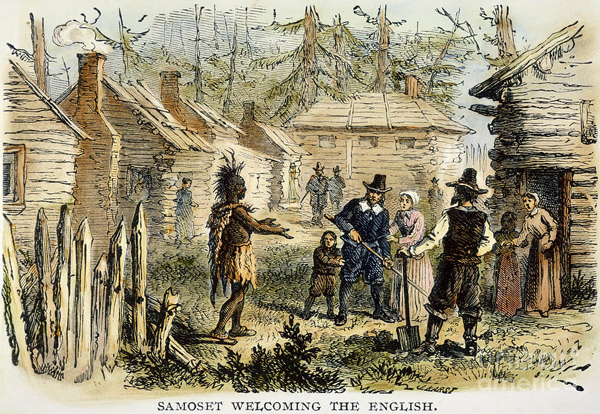
Massasoit and Squanto Save the PilgrimsLife in Massachusetts was difficult for the settlers. Half of the original passengers on the Mayflower died of disease, starvation, and the harsh Massachusetts winter. Unlike Jamestown, however, Indian attacks were not a constant threat. Rather, the local Wampanoag Indians were responsible for the survival of the colonists. Squanto, who was kidnapped and had experienced life in Europe as a slave and later as an observer of European culture in a monastery, had recently returned to Massachusetts only to find his former village ravaged by death and disease. He assimilated into the Wampanoag village located at Plymouth and later joined the Pilgrim colony at Plymouth when they learned he could speak English. Squanto taught the Pilgrims how to establish friendly relations with the Indians and how to plant crops, fish, and trap mammals for the fur trade. If it wasn't for Squanto, the Wampanoags and their sachem Massasoit, all of the settlers would have surely perished. One year after the landing of the Mayflower, the surviving Pilgrims celebrated their first fall harvest with a prodigious feast. They invited 91 of their Indian neighbors. The feast was what some call the first ever Thanksgiving. Discussion Questions
Glossary
Escaping PersecutionIn 1607, a group of Puritan Separatists left England for the Netherlands to escape religious persecution. Though they were allowed to worship freely, they had low-paying jobs and worried their children were losing their beliefs. They made a deal with a company in London to move to America in exchange for future profits from the colony. We Thought Virginia Was the Destination!On September 16, 1620, 35 Puritans and 67 others set sail on the Mayflower for Virginia. After 10 weeks at sea, they landed near Cape Cod, far from Virginia. Some wanted to rebel, but they wrote the Mayflower Compact to keep peace and agree on rules for their new colony. Should We Stay or Should We Go?At first, life was hard. There was no food, no shelter, and no help from local Native Americans yet. Some settlers returned to England, but 44 of the 45 who stayed survived the winter. The Mayflower CompactSigned by 41 men, the Mayflower Compact set up fair rules and loyalty to England. The settlers formed a council and chose to stay at a spot they named Plymouth, where they landed on December 21, 1620. Massasoit and Squanto Save the PilgrimsThe Pilgrims struggled with disease, hunger, and cold. The Wampanoag Indians helped them survive, especially Squanto, who spoke English and taught them how to grow food and trade. In 1621, the Pilgrims and Wampanoags celebrated their first harvest, a feast now known as the first Thanksgiving. |
||||||||||||||||||||||
|
||||||||||||||||||||||
| Plymouth Colony Activities | ||||||||||||||||||||||
|
||||||||||||||||||||||