Houma Nation |
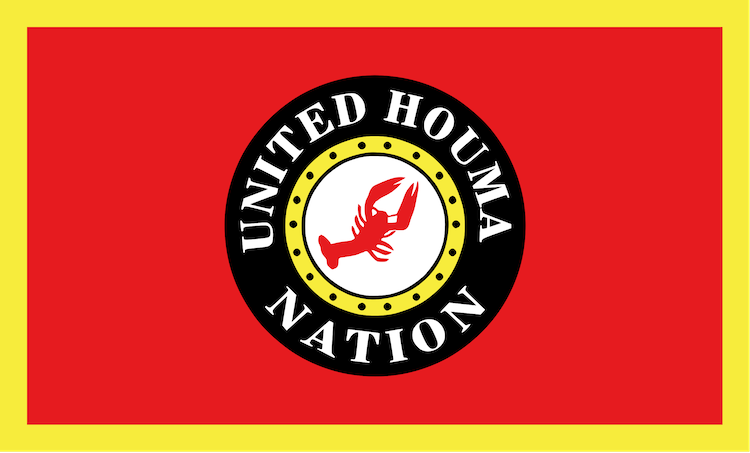
Houma Nation Flag |
Origin of the NameThe name "Houma" comes from the Choctaw word *humma*, meaning "red." The Houma people were known as the "Red People," likely referencing either their war colors or red stick markers that symbolized their territory. This has also been linked to the "Red Stick" or *Isti Humma*, a symbol used to mark boundaries.RangeHistorically, the Houma lived in what is now westernMississippi and Louisiana, especially along the lower Mississippi River. By the 18th century, they had migrated southward and were settled around present-day Houma, Louisiana. Today, the Houma Nation is primarily based in southern Louisiana, especially in Terrebonne and Lafourche Parishes.DietThe Houma diet was rich and diverse, based on the natural resources of the Mississippi River delta. They farmed maize (corn), beans, squash, and sunflowers. They also fished in the bayous and rivers, caught shellfish, and hunted deer, alligators, and birds. Wild plants like berries and roots supplemented their food supply.Home TypeThe Houma lived in thatched huts made of palmetto leaves and cane, suited to the swampy, humid climate of southern Louisiana. Their homes were often raised on stilts to protect against flooding. The structures were dome-shaped or rectangular with sloped roofs.CultureHouma culture blended influences from neighboring tribes like the Choctaw and later European colonists. They spoke a Muskogean language, now lost, but many Houma people today speak French or Louisiana Creole due to centuries of French colonial influence. Spiritual beliefs included reverence for nature spirits and the sun, and they practiced ceremonies involving dance, music, and feasting. The Houma were known for their craftsmanship, especially basket-weaving, palmetto mats, and painted pottery. One cultural tradition involved the use of a "red stick" to mark boundaries and declare war—a practice that later inspired the name for Baton Rouge, Louisiana ("red stick" in French). Storytelling, especially about animals and tribal history, was also an important part of Houma life.WarfareThe Houma were skilled warriors who used bows, clubs, and blowguns. While not as expansionist as some larger tribes, they defended their territory vigorously. Their conflicts often arose from competition over resources or alliances with European powers. In the colonial era, the Houma allied with the French against tribes like the Chickasaw and the British-backed tribes. As European colonization intensified, warfare became more about survival and preservation of land and culture.Discussion Questions
GlossaryOrigin of the NameThe name "Houma" comes from a Choctaw word meaning "red." The Houma called themselves the "Red People," and they used a red stick to mark their land. This red stick is also where the city name Baton Rouge ("red stick" in French) comes from.RangeThe Houma originally lived in eastern Mississippi. Later, they moved to southern Louisiana near rivers and bayous. Today, most Houma people live in Louisiana, especially around the city of Houma.DietThe Houma ate many foods from the land and water. They grew corn, beans, and squash. They fished, hunted animals like deer and alligators, and gathered wild plants and berries.Home TypeThe Houma lived in houses made from cane and palmetto leaves. Their homes had sloped roofs and were often built on stilts to stay above water in the swampy land.CultureThe Houma had their own language, but it is no longer spoken. Today, many Houma speak French or a local Creole language. They believed in nature spirits and honored the sun. Music, dance, and storytelling were important parts of their life. They also made baskets, mats, and pottery by hand.WarfareThe Houma protected their land from enemies. They used bows and clubs in battle. They sometimes joined with the French to fight other tribes. As more Europeans arrived, the Houma fought to keep their land and way of life. |