Idaho History |
 |
Idaho’s Geography and Early PeoplesIdaho is known for its rugged mountains, vast forests, and scenic rivers. Long before European contact, Native American tribes such as the Shoshone, Nez Perce, and Coeur d'Alene lived in the region for thousands of years. Exploration and Fur TradeIn 1811, French-Canadian explorer Francois Payette became the first European to explore Idaho. His journey opened the door for fur trappers and traders who established posts and small settlements across the land. Gold Rush and ConflictIn the mid-1800s, the discovery of gold in Idaho attracted thousands of miners, settlers, and entrepreneurs to the region. The gold rush resulted in the rapid growth of settlements and towns, with Boise, the current capital of Idaho, becoming a major hub for miners and settlers. However, the influx of settlers also led to conflicts with the native tribes, resulting in the Nez Perce War of 1877, one of the most significant conflicts in Idaho's history.
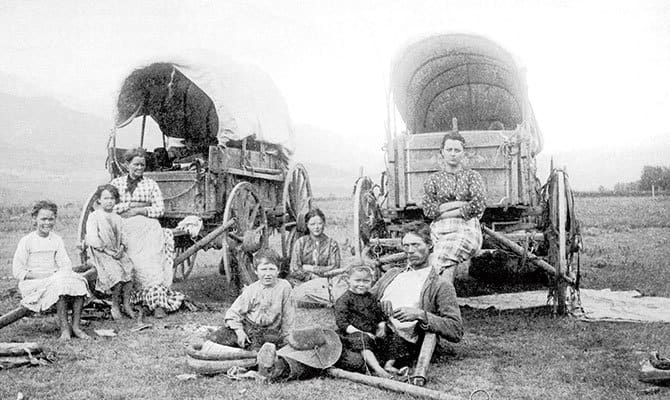
Travelers along the Oregon Trail in Idaho Becoming a StateIdaho was originally part of the Oregon Territory, but it became a separate territory in 1863, and it was admitted to the Union as the 43rd state on July 3, 1890. During the late 1800s and early 1900s, Idaho's economy was based on mining, timber, and agriculture. The state was known for its rich mineral resources, including silver, gold, lead, and zinc, and its vast forests, which provided a wealth of timber and other resources. Economic Struggles and GrowthIn the 1930s, the Great Depression had a significant impact on Idaho's economy, and the state suffered from a severe drought, which resulted in the Dust Bowl. However, Idaho's economy rebounded during World War II, with the construction of military installations and the establishment of the Idaho National Laboratory, which became a major center for nuclear research and development. Modern IdahoToday, Idaho’s economy includes agriculture, manufacturing, high-tech industries, and tourism. Its mountains, rivers, and outdoor activities continue to attract visitors from across the country. Discussion Questions
Glossary
Timeline of Idaho History
Native Tribes and ExplorationFor thousands of years, tribes like the Shoshone, Nez Perce, and Coeur d’Alene lived in Idaho. In 1811, Francois Payette explored the area, and fur trappers soon followed. Gold Rush and SettlementThe discovery of gold in the mid-1800s brought thousands of settlers. Boise grew quickly, but the arrival of so many people led to conflicts with Native tribes, especially during the Nez Perce War in 1877. Territory to StatehoodIdaho was once part of the Oregon Territory but became its own in 1863. It joined the Union as the 43rd state in 1890, with mining, farming, and timber as its main industries. Challenges and GrowthThe 1930s were hard for Idaho because of the Great Depression and drought, but World War II brought recovery. The Idaho National Laboratory was built and became an important research site. Modern EconomyToday, Idaho’s economy is a mix of farming, technology, and tourism. Its natural beauty and outdoor activities continue to attract visitors from across the country. |